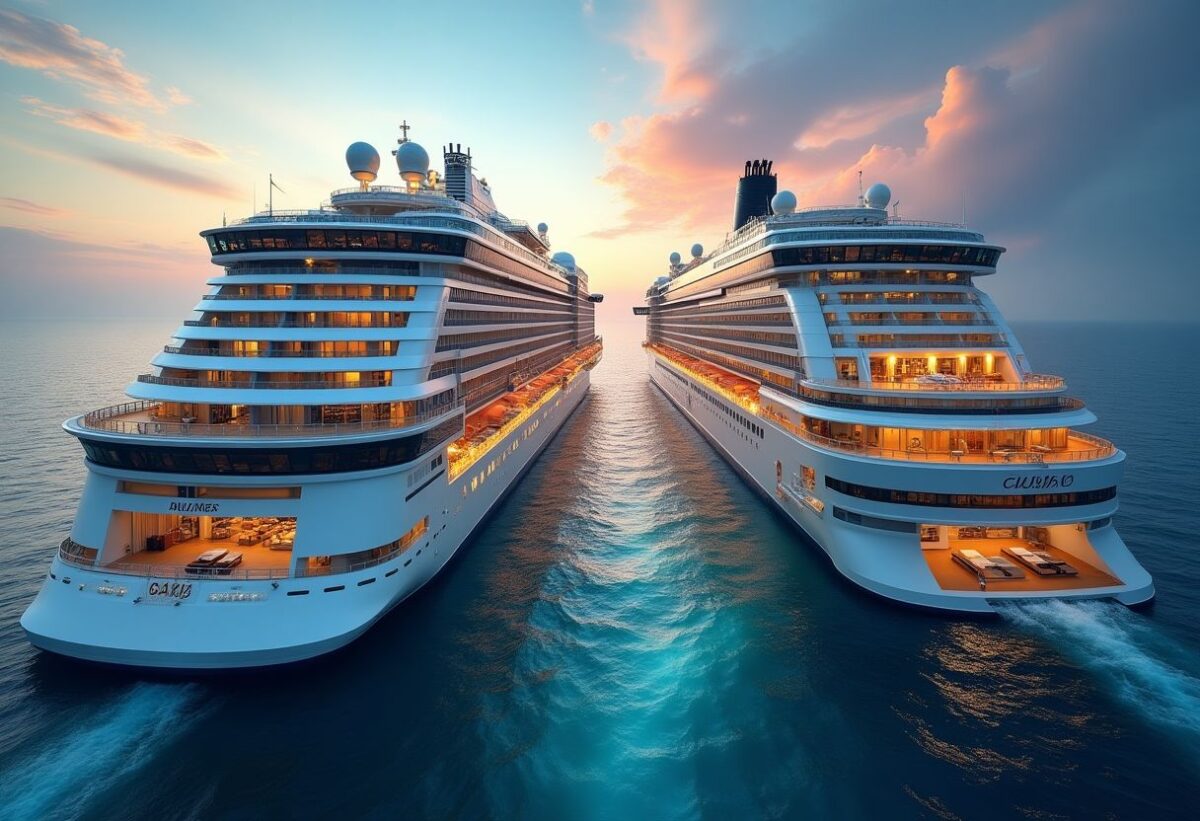
In the vast world of ocean cruises, the choices seem endless for sea travel enthusiasts. Yet, one question often arises in discussions: what is the difference between a luxury cruise ship and a classic cruise ship? While one promises unparalleled luxury and a personalized experience, the other charms with its friendly atmosphere and variety of activities.
Facilities and Amenities
The amenities on board these ships play a central role in determining their category. Luxury cruise ships stand out for their sumptuous facilities and attention to detail.
- Luxury cruise ships offer spacious and elegant suites, often equipped with private balconies. The materials used, such as marble and precious wood, add a touch of sophistication.
- On board, travelers can enjoy luxurious spas, Michelin-starred restaurants, and infinity pools.
- Classic cruise ships focus on a variety of options to appeal to a broader audience. The cabins, while comfortable, are generally smaller and less luxurious.
- Onboard activities include shows, pools, and game rooms, aimed at entertaining families and groups of friends.
Customer Experience and Service
The customer experience is another aspect that differentiates these two types of ships. While one prioritizes superior quality service, the other focuses on friendliness and accessibility.
Luxury cruise ships are known for their personalized service, where every detail is designed to provide a unique experience. Well-trained crew members anticipate passengers’ needs, ensuring total satisfaction. Passengers benefit from a higher staff-to-guest ratio, ensuring constant and discreet attention.
In contrast, classic cruise ships aim to satisfy a diverse clientele by offering efficient but less personalized service. Travelers can enjoy a friendly and relaxed atmosphere, conducive to meeting and mingling. The versatility of the staff allows for a wide range of services to be provided to a larger number of passengers.
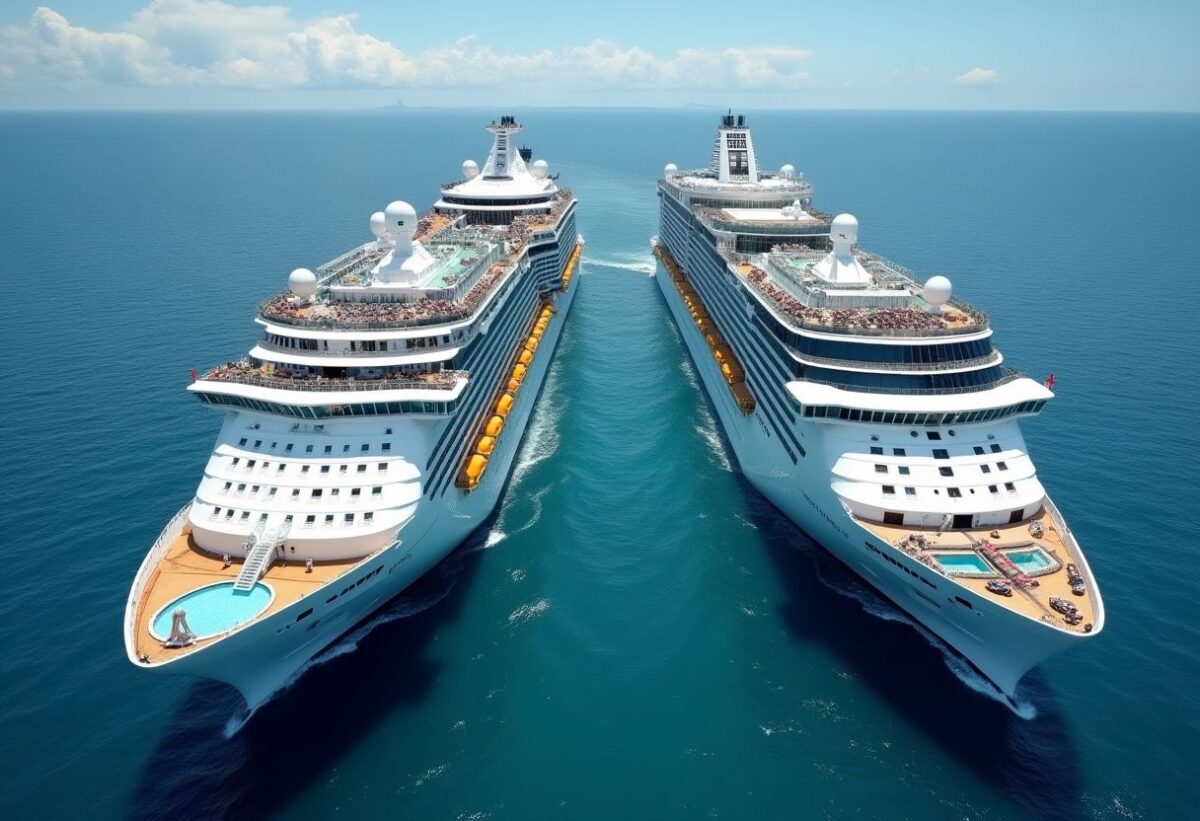
Destinations and Itineraries
The itineraries offered by these ships also reflect their fundamental differences, whether it involves exotic destinations or more traditional stops.
- Luxury cruise ships often favor rare and exclusive destinations, accessible only to a fortunate few. The itineraries are carefully planned to include less-frequented ports of call, thus providing an authentic and immersive experience.
- Classic cruise ships, on the other hand, take more traditional routes, with stops at popular and well-established ports. This allows passengers to discover the must-see attractions of each destination.
- Some companies, like croisiere ponant, offer voyages that combine the best of both worlds, with itineraries that blend classic stops and more intimate destinations.
Pricing and Target Audience
The price of tickets and the type of clientele targeted are also determining factors between luxury cruise ships and classic cruise ships. Each type of ship attracts a different audience, depending on their budget and expectations.
Luxury cruise ships cater to a wealthy clientele, willing to invest to experience something extraordinary. The prices, often high, include exclusive services and luxury amenities. Passengers seek a unique experience and are ready to pay for tailored services.
In contrast, classic cruise ships are designed to attract a wide range of passengers, from families to young adults and retirees. The offerings are varied and tailored to different budgets, making these cruises accessible to a larger number of people. This allows everyone to find an option that matches their desires and means.
The choice between a luxury cruise ship and a classic cruise ship depends on personal expectations, budget, and the experience sought. While some prioritize elegance and exclusivity, others emphasize diversity and friendliness. Regardless of the choice, each of these ships offers a unique adventure, promising unforgettable memories on the ocean waves.