
The telephone booths have long been iconic symbols of the urban landscape, both in France and internationally. However, in the age of wireless communication, their function has evolved, along with their design and functionality. In this context, modular phoneboxes are emerging as a modern and adaptable alternative, meeting contemporary needs. One question that arises is: are they easier to relocate than their classic counterparts? By examining various structural, technological, and economic aspects, it is possible to better understand whether these new installations truly offer a significant advantage in terms of mobility.
Structure and design: a radical transformation
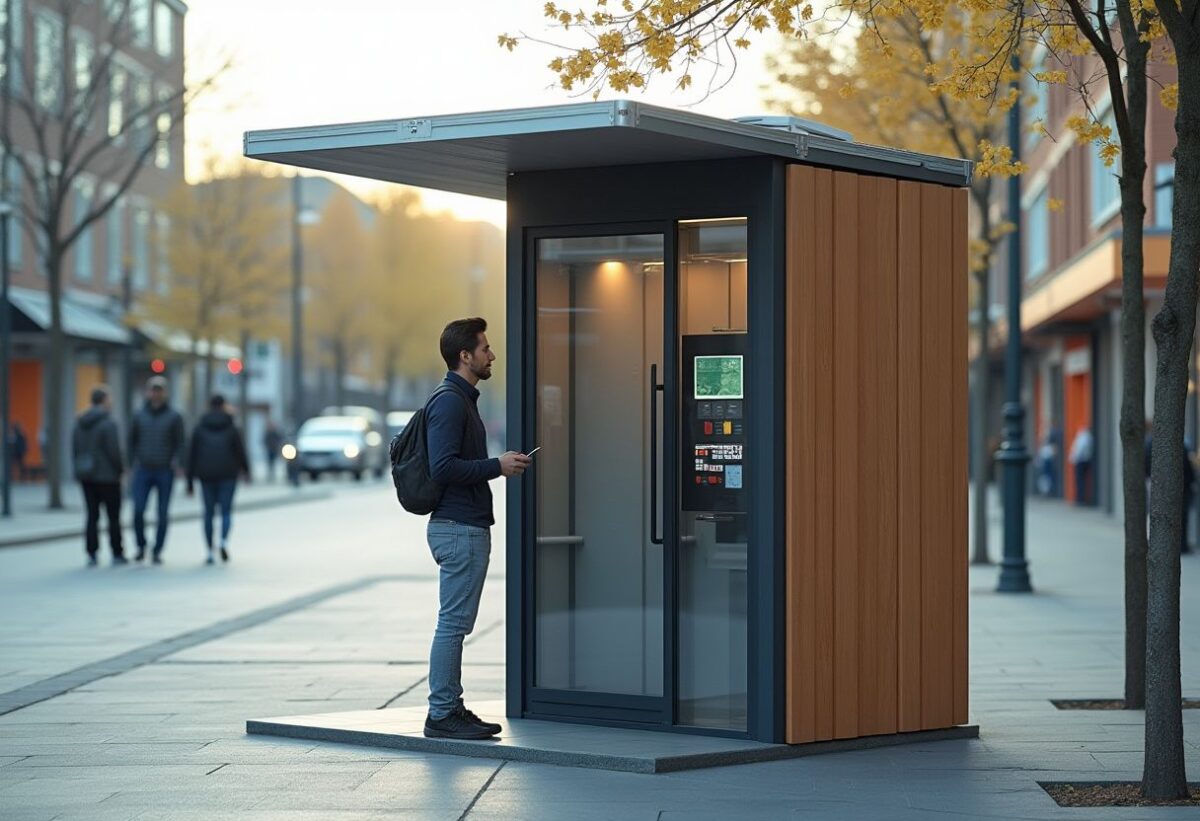
The modular phoneboxes have been designed with an innovative approach, integrating modern materials and advanced construction techniques. This redesign aims to facilitate their transport and reinstallation.
Modular structures are characterized by the use of lighter and often recyclable materials. Unlike traditional booths, which are often made of thick glass and heavy metal, modular versions use composites and lightweight metals that allow for easy handling.
The modular design allows for quick customization and adaptation to the specific needs of the user. This includes removable partitions, integrated lighting systems, and even solar panels for autonomous energy. Furthermore, this modular concept enables quick installation and dismantling, thus reducing intervention times during a relocation.
Technological aspects: an undeniable advancement
The integration of technology in modern phoneboxes represents a major advancement compared to classic models. These technologies not only enhance the user experience but also facilitate the relocation of these structures.
- Integrated wireless connectivity systems allow the booths to remain operational even when changing locations, thus reducing downtime.
- Integrated sensors monitor the structural condition of the booth in real-time, enabling quick detection of damage or maintenance needs, thereby simplifying the logistics of relocation.
- The use of space management software facilitates relocation planning, ensuring that each element is correctly reassembled at the new location.
Economic considerations: costs and gains
Focusing on the economic aspect, modular phoneboxes offer a potentially more cost-effective approach. The savings achieved through their modular design manifest at several levels.
During a relocation, time is a crucial factor. Modular phoneboxes require less time for disassembly, transport, and reinstallation, resulting in reduced labor costs. Additionally, their lightweight nature reduces transport fees, especially in dense urban environments where logistics can be complex and costly.
The modern materials used, often more durable, also mean less repair and replacement in the long term. This leads to additional savings on maintenance costs. Moreover, the ability to resell or reuse modules in other configurations provides financial flexibility.
Environmental impact: an ecological perspective
Beyond the economic and technological aspects, the environmental impact of modular phoneboxes also deserves consideration. These structures align with a trend towards more sustainable and environmentally friendly solutions.
- The materials used are frequently recyclable and designed to minimize the carbon footprint, both during manufacturing and transport.
- By reducing the need to build new structures with each relocation, the consumption of new resources is limited.
- The modules can be equipped with eco-friendly technologies such as rainwater harvesting systems or solar panels, thereby enhancing their energy efficiency.
Modular phoneboxes appear as a modern and effective solution to the challenges posed by the growing needs for mobility and flexibility. Their innovative design, combined with advanced technologies and environmental awareness, makes them particularly attractive. Ultimately, they not only simplify the relocation processes but also represent a more ecological and economically viable choice in the long term.