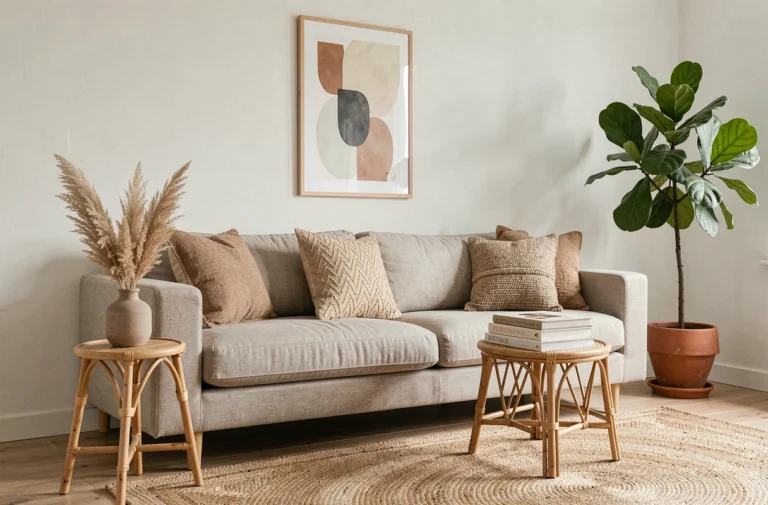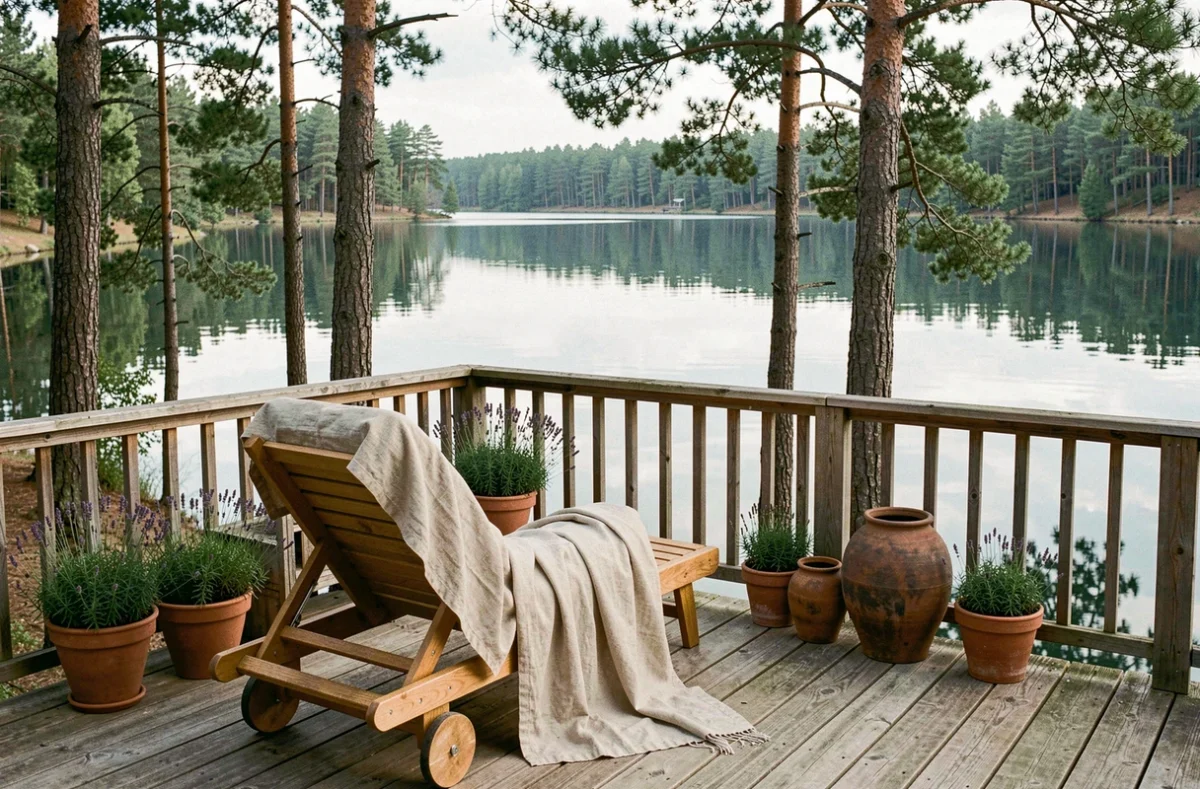
When looking to design a house near a body of water, the first instinct is often to browse through decor catalogs. However, the real starting point is the land itself: its moisture, regulatory constraints, and the light that reflects off the water. The art of living by a lake begins with a careful reading of the site before choosing any textile or wall color.
Moisture and ventilation: the technical prerequisite for any lakeside decoration
A house by a lake experiences a significantly higher ambient humidity level than a standard city dwelling. This is evident within the first few months: condensation on the windows in the morning, persistent odors in the closets, paint peeling in the bathroom.
The classic response is to renovate the waterproofing of the walls and repaint. However, project feedback shows that without proper ventilation, humidity returns after the work is done. Improving waterproofing without addressing air circulation can even worsen condensation and promote mold growth.
Before installing raw wood paneling or putting up botanical wallpaper, one should start with a moisture diagnosis. Hygroregulated ventilation solutions, which adjust airflow based on actual humidity levels, are recommended in this type of setup. Any salts in the walls are treated, drying is monitored over several weeks, and only then is the decor tackled.
On maisonbordelac.fr, there are concrete examples of projects that integrate this logic from the design phase, combining material choices with humidity management.

Materials and interior decoration suitable for the waterside
The choice of materials in a lakeside house is not trivial. Untreated solid wood flooring will warp within a few seasons. An overly absorbent upholstery fabric will develop moisture stains at the seats near the windows.
Wood: omnipresent but not just any kind
Wood remains the flagship material for a lakeside ambiance. It can be found in exterior cladding, exposed beams, and living room furniture. To ensure the style lasts, it is essential to prioritize species that are naturally resistant to moisture or wood that has been treated in an autoclave.
- Larch and Douglas fir resist hygrometric variations well without heavy chemical treatment, making them suitable for less heated spaces like verandas or entries
- Solid oak, widely used for interior furniture, requires an oiled finish rather than varnished to maintain its ability to breathe in response to humidity exchanges
- Composite woods (wood-polymer mix) are suitable for terraces and docks, where exposure to water is direct and constant
Colors and textiles: playing with the lake’s light
The proximity to water generates a particular luminosity, more diffuse, with changing reflections throughout the day. Light shades amplify this natural light: off-white, pearl gray, pale blue. Dark colors work as accents (cushions, frames, decorative objects) but can weigh down the space if they dominate the walls.
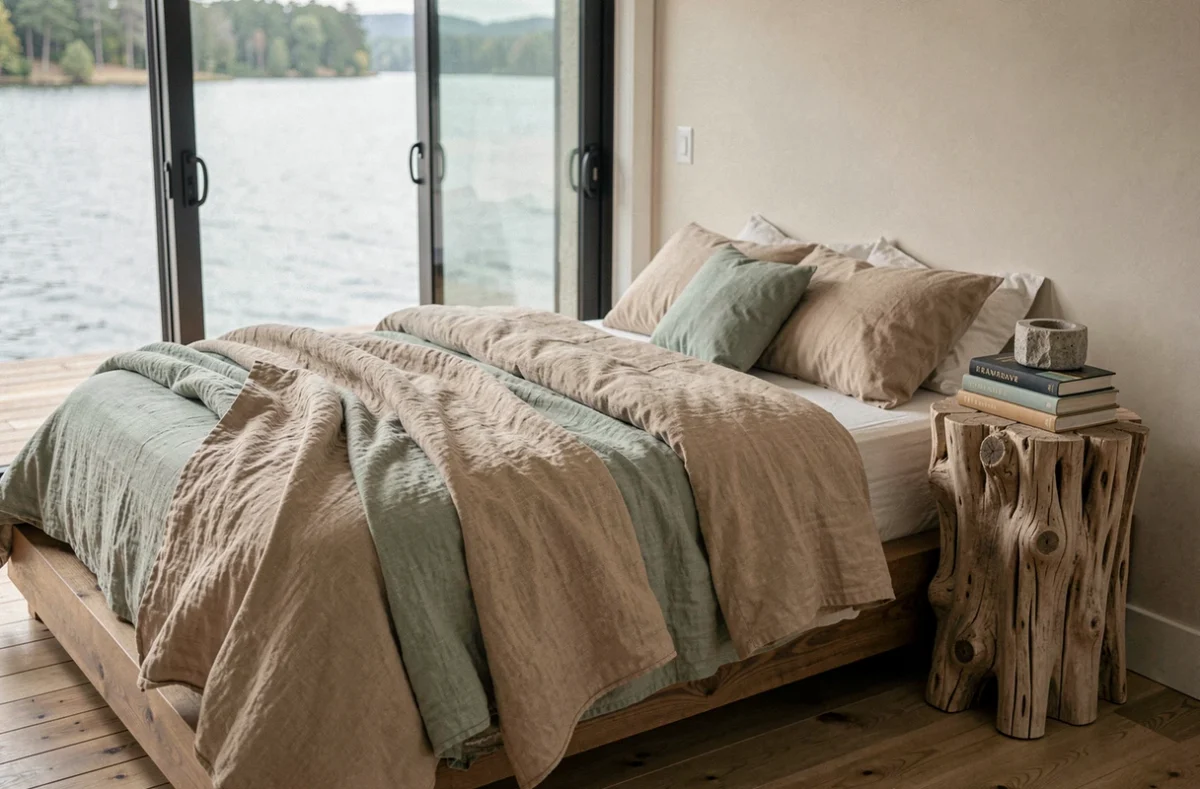
For textiles, quick-drying fibers are preferred. Washed linen, for example, absorbs moisture without retaining it and provides a raw texture that aligns with the natural style. Thick cotton curtains, on the other hand, become sponges in a poorly ventilated room.
Zoning and regulations: what to check before setting up a terrace or dock
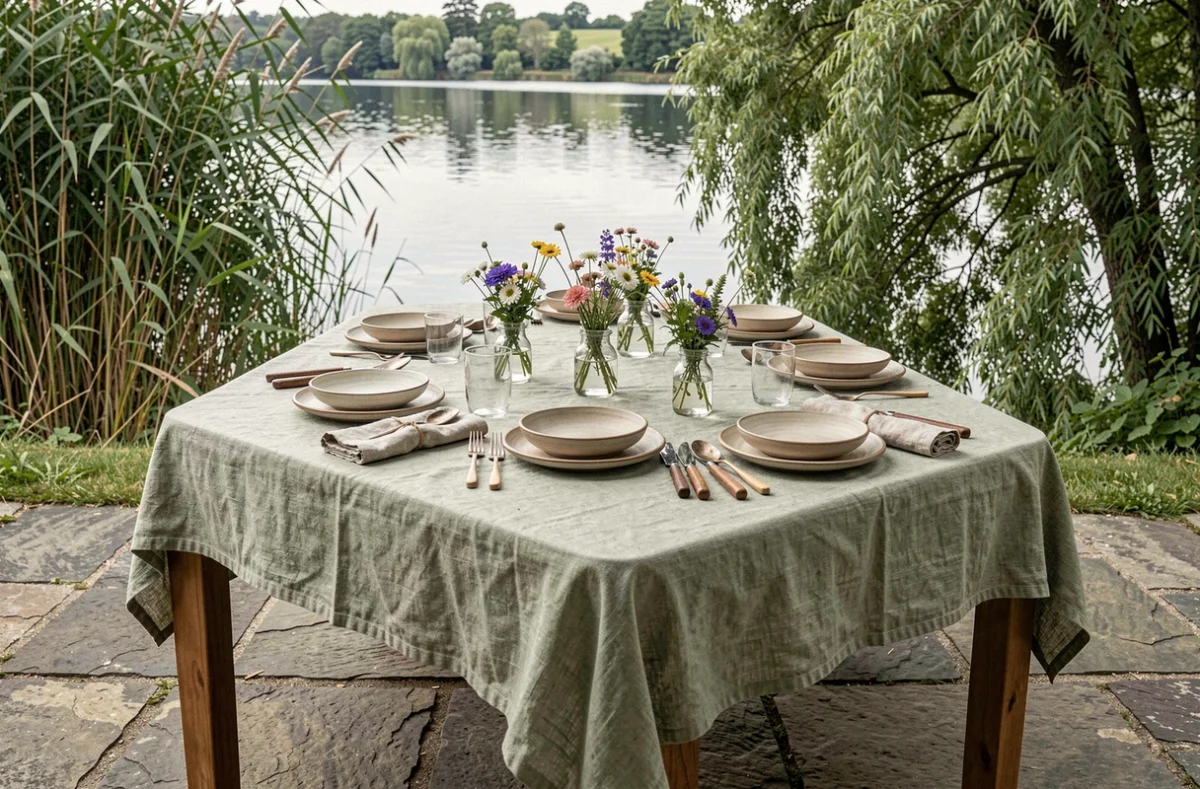
One can easily imagine a wooden terrace with a direct view of the lake, a dock for summer mornings, perhaps a small annex for storing equipment. The regulatory reality requires checking the local urban plan (PLU) before any outdoor project.
Land near a body of water is often located in natural or agricultural zones, where construction is heavily regulated. It is necessary to consult the local PLU or PLUi, check on the Urbanism Geoportal if the land is in a wetland area, and ensure that no flood risk prevention plan (PPRI) limits the proposed work.
Local biodiversity can also halt a project. The presence of protected species can render certain works illegal, even with a building permit obtained. A specific exemption becomes necessary when the impact on habitats cannot be avoided. This includes excavation, roadways, and modifications to the banks.
In summary, before drawing up the plan for the future terrace, one must go through the town hall and urban planning services. Feedback on this point varies by municipality, with some being much more restrictive than others regarding developments along the lake.
Outdoor decoration and a living room open to nature
The art of living by a lake relies on the continuity between indoors and outdoors. The living room sets the tone: a large glass opening facing the lake transforms the view into a full-fledged decorative element.
For outdoor furniture, avoid untreated wrought iron (rust accelerated by ambient humidity) and low-quality synthetic rattan that fades within a season. Powder-coated aluminum or solid teak withstand the test of time without excessive maintenance.
- Position seating facing the lake rather than facing the house, so that every moment outside is oriented towards the landscape
- Incorporate soft outdoor lighting (solar posts, low-voltage string lights) that extends the use of the terrace after sunset without visually polluting the natural setting
- Plant local vegetation along the terrace edge to create a natural filter between the living space and the banks, while respecting any restrictions related to wetland areas
Recent environmental regulations also influence material choices for new constructions or major renovations. Prioritizing bio-sourced materials (wood fiber insulation, lime-based coatings) aligns with both the aesthetic logic of lakeside living and current regulatory requirements.
Designing a house by a lake means accepting that the decor is not limited to objects placed on a shelf. The lake imposes its rhythm, its moisture constraints, its urban planning rules. The most sustainable decor choices are those that start from the land, not from the catalog.