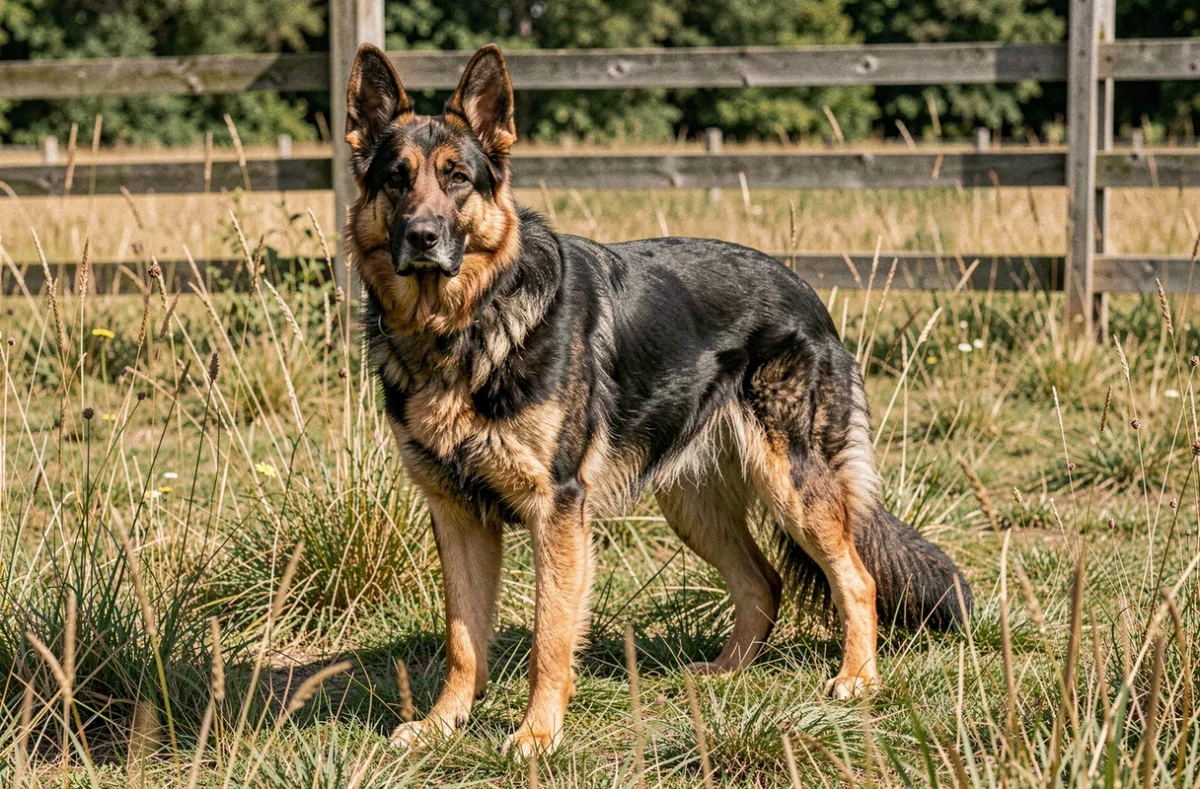
A German Shepherd–Beauceron cross produces a dog whose behavioral profile varies far more than breed profiles might suggest. Genetic diversity does not guarantee better health: a 2024 British study published in PLOS ONE, comparing three popular crossbreeds with their parent breeds, found no significant differences for most of the health conditions studied. It is therefore better to ask for both parents’ medical histories and screening results than to rely on the “crossbreed” label.
Parent health screenings and predispositions in the German Shepherd–Beauceron cross
The German Shepherd can pass on a predisposition to hip dysplasia, degenerative myelopathy, and chronic digestive disorders. The Beauceron carries a risk of gastric dilatation-volvulus due to its deep chest, as well as joint sensitivity in the hindquarters (including the double dewclaws).
The puppy may inherit vulnerabilities from both lineages at the same time. Asking for both parents’ hip and elbow scores remains the only reliable screening measure before adoption. A breeder or private owner who refuses to show these results is sending a clear warning sign.
In France, dogs must be identified before being transferred to a new owner, including when they are given away. The prospective owner must sign a certificate of commitment and knowledge at least seven days before acquiring the dog. These formalities apply whether the dog is purebred or a crossbreed. As for insurance, even though this cross is not classified as a regulated category, the owner remains legally liable for any damage the dog causes. Checking that your home insurance policy covers the animal can help avoid costly surprises.
We recommend putting together a veterinary file as soon as you adopt the dog, including X-rays, blood test results, and a vaccination schedule, to establish a baseline that any future veterinarian can use. In terms of temperament and behavior, the German Shepherd–Beauceron cross has a temperament shaped as much by early socialization as by parental genetics.
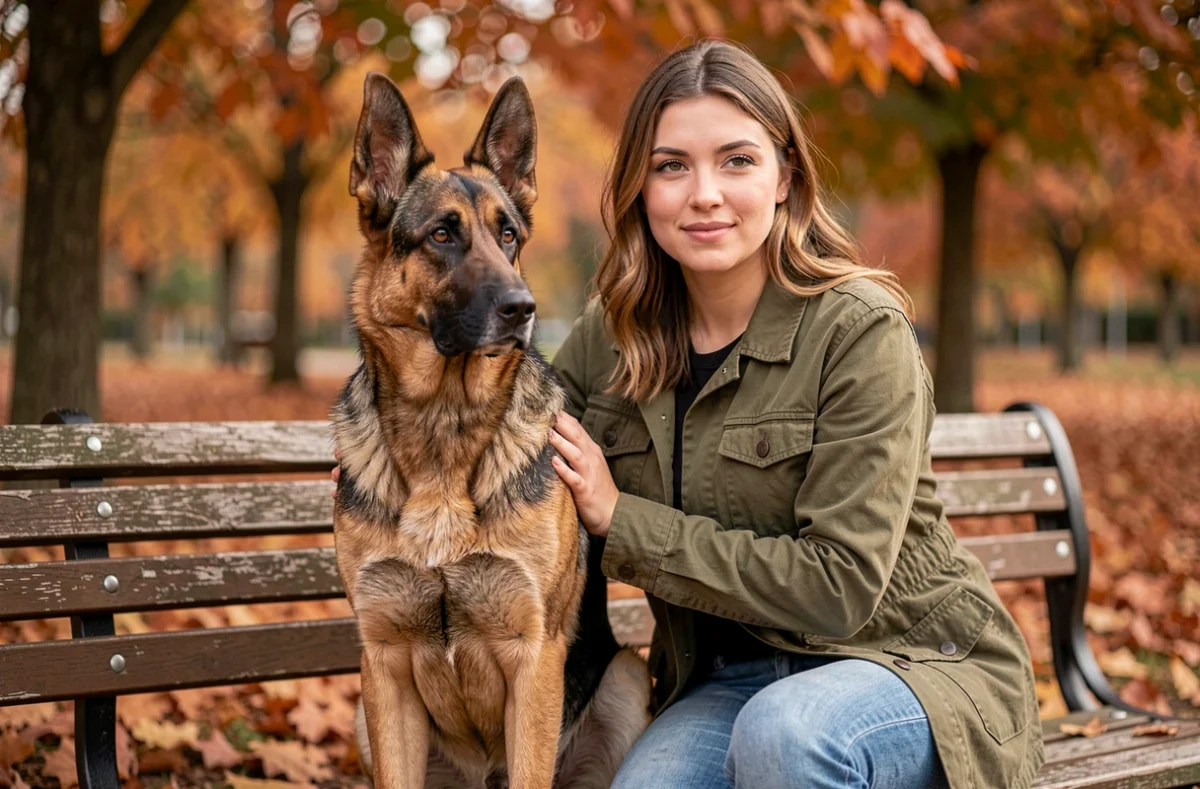
The crossbreed’s real temperament: what genetics can’t predict
It is a common mistake to assign a fixed temperament to this cross based on breed standards. Each puppy inherits a random mix of traits: some will be highly reactive to their surroundings (German Shepherd lineage), while others will show marked independence and a lower tolerance for constraints (Beauceron lineage).
Behavior observed in a shelter does not predict how a dog will behave at home. Stress, loss of familiar routines, and housing conditions can all affect a dog’s reactions. A dog that barks or growls in its kennel does not necessarily have a lasting aggression problem. Asking the rescue organization about the dog’s behavior in different situations (on walks, around other dogs, and when meeting strangers) will give you a more accurate picture.
What remains consistent in the vast majority of dogs from this cross:
- A need for daily mental stimulation, not just physical exercise. Tracking, scent work, or complex obedience exercises channel energy more effectively than simply running around at the park.
- A territorial protective instinct inherited from both lineages, which emerges early (sometimes as young as five months) and needs to be managed right away to prevent reactivity toward visitors.
- A quick ability to learn, which cuts both ways: the dog learns bad habits just as quickly as good ones, making consistency in training essential.
How well the dog fits your household’s lifestyle: a practical assessment
Mainstream articles list “ideal conditions” (a house with a yard, an active family) without giving readers the tools to assess their own situation. The real question is not whether this cross is suitable “in general,” but whether the specific dog you meet is compatible with your actual day-to-day life.
How long the dog will be left alone each day
A well-socialized adult German Shepherd–Beauceron cross may tolerate being left alone for four to five hours, provided it has had enough exercise beforehand. Beyond that, destructive behavior, barking, or self-injury (compulsive paw licking) occurs in most dogs. If both adults in the household work on-site and there is no pet-care arrangement, this cross presents a fundamental challenge.
Living space and layout
A yard is no substitute for structured activity. Left alone in a large yard, a dog will pace or dig; it will not get meaningful exercise. Two daily walks of at least forty-five minutes, including one that involves mental work, matter more than the size of the yard.
The owner’s experience with working dogs
A first-time dog owner can succeed with this cross if they commit to structured training support from the first few weeks. Working with a behavioral trainer is not an admission of failure; it is a preventive measure. The Beauceron’s strong-willed temperament combined with the German Shepherd’s sensitivity produces a dog that tests boundaries while responding strongly to emotional bonds.
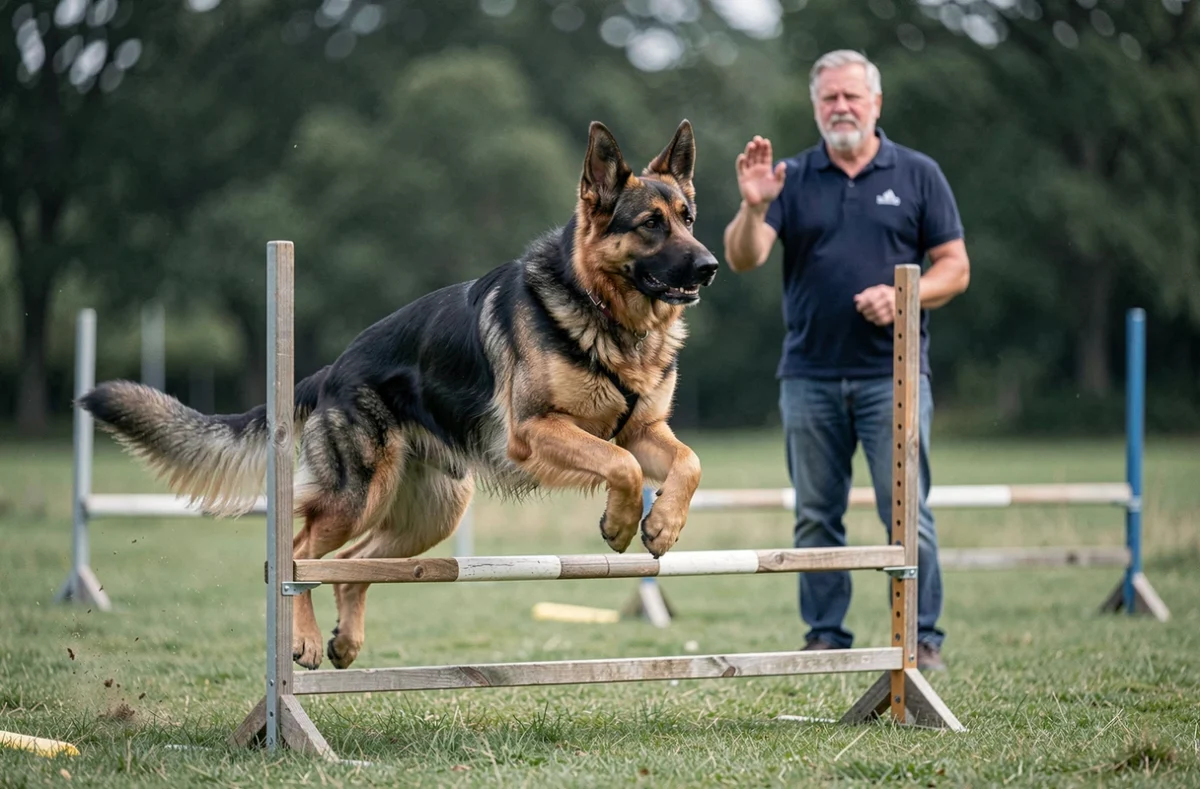
Training and socialization for the German Shepherd–Beauceron cross: common mistakes
Physical punishment is counterproductive with this cross. The German Shepherd may respond by shutting down and becoming fearful, while the Beauceron may push back directly. In both cases, the relationship quickly deteriorates.
Positive reinforcement combined with clear structure remains the most effective approach. In practice, this means keeping rules consistent (no sofa one day, sofa allowed the next) and immediately rewarding the behavior you want.
The most common mistake concerns socialization. Many owners expose their puppy to as many stimuli as possible during the first few weeks, then drastically reduce outings once the “critical” period has passed. This cross needs ongoing socialization, at least until eighteen months of age, to help stabilize its reactivity. Stopping too early can lead to setbacks in the dog’s tolerance of other dogs or noisy urban environments.
Diet also has a direct effect on behavior. A dog of this size fed food low in animal protein may compensate by becoming restless. We find that food with animal protein listed as the first ingredient, served in two meals to reduce the risk of gastric torsion, noticeably stabilizes excitability levels.
Living with a German Shepherd–Beauceron cross means accepting a dog that requires time, consistency, and genuine mental engagement. Breed profiles offer a general tendency, not a guarantee. Assessing the individual dog in its own context remains the only reliable way to build a successful relationship.