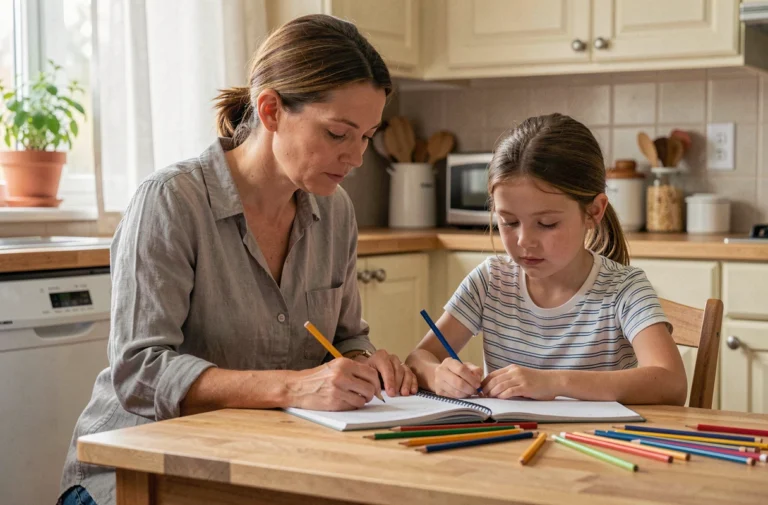
Everyday learning activities are not limited to a craft session planned for Wednesday afternoon. The real key—often overlooked in lists of ideas—is the quality of the cognitive and sensory stimulation woven into ordinary daily routines.
Folding laundry, sorting vegetables by color, pouring water from one container into another: these small activities engage fine motor skills, visual discrimination and logical reasoning without requiring any extra equipment.
Sensory stimulation and daily routines: learning without special equipment
A child handling bread dough is working on finger proprioception against varying resistance—something no store-bought modeling clay can quite replicate. The sticky texture, the warmth as the dough rises and the smell of fermentation engage several senses at once. This kind of multisensory stimulation woven into daily routines is richer than most activities confined to a dedicated session.
The WHO recommends that children over one year old get at least three hours of physical activity a day and avoid spending more than an hour at a time in equipment that keeps them seated, excluding sleep. Putting away groceries, climbing stairs or carrying a small watering can in the garden all count as physical activity and help develop spatial awareness.
We find that families who incorporate these tasks into everyday life do not need to “schedule” a dedicated activity slot. Learning opportunities arise naturally throughout the day, alternating between focused fine-motor tasks (cutting, threading) and whole-body movement (running, climbing, dancing).
Parents looking to structure these moments around an approach designed with children in mind can find practical ideas in Frimousse et Coccinelle activities, where suggestions center on free play and hands-on exploration.
Creative play with everyday objects: painting, collage and repurposing
The most effective materials for a creative activity at home cost next to nothing. Toilet paper rolls, bottle caps, fabric scraps, newspaper: any object can become a creative tool if children are free to decide how to use it.
Free painting and transfer techniques
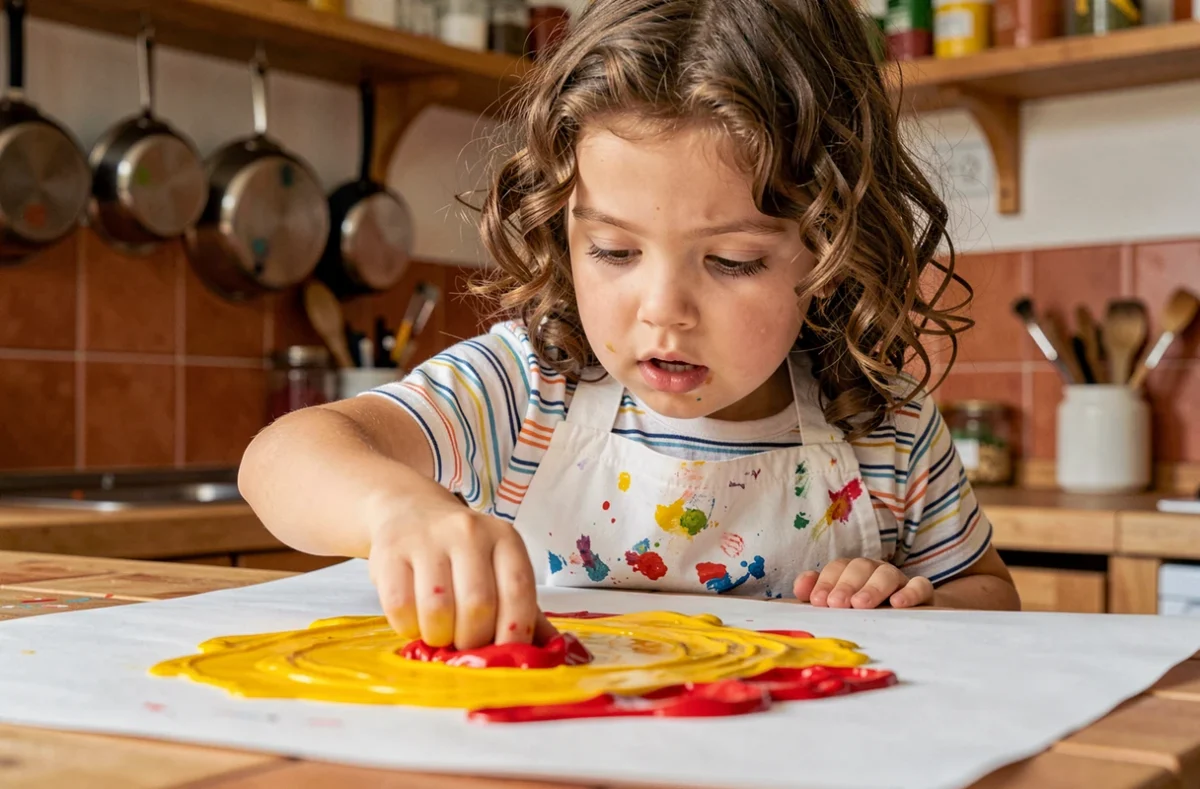
Finger painting is a classic, but it becomes more engaging when you vary the surfaces. Painting on corrugated cardboard, a damp sheet of paper or kraft paper changes how the pigment is absorbed and creates effects the child cannot predict. Unpredictable results encourage adaptability and frustration tolerance.
Transfer painting by folding (add drops of paint, fold the paper, then open it) introduces the idea of symmetry without any theoretical explanation. Children discover it through the process itself.
Collage and three-dimensional construction
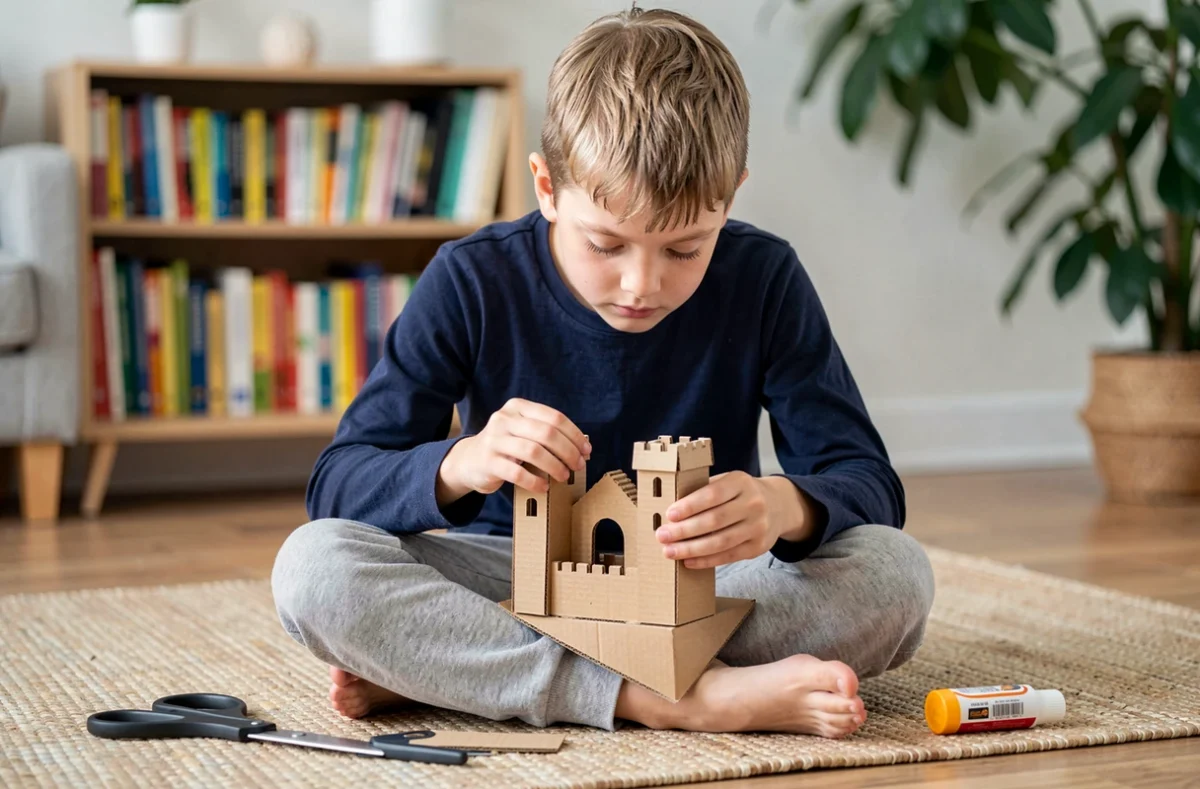
Collage is about more than sticking on stickers. Offering a range of materials (fallen leaves, sand, wool, aluminum foil) develops planning skills: children have to choose the order in which to layer materials, anticipate drying time and adjust how much glue they use. These are executive skills developed through creative play, not through classroom instructions.
- Building a sculpture from packaging boxes and tape, with the sole requirement that it stand upright, develops balance and problem-solving skills.
- Making a character from odd socks and buttons engages the fine motor skills needed for sewing or gluing, while also nurturing storytelling and imagination.
- Creating a marble run from cardboard tubes and tape means testing, adjusting and trying again—the full cycle of an experimental process.
Nature activities and free exploration: the outdoors as a place to learn
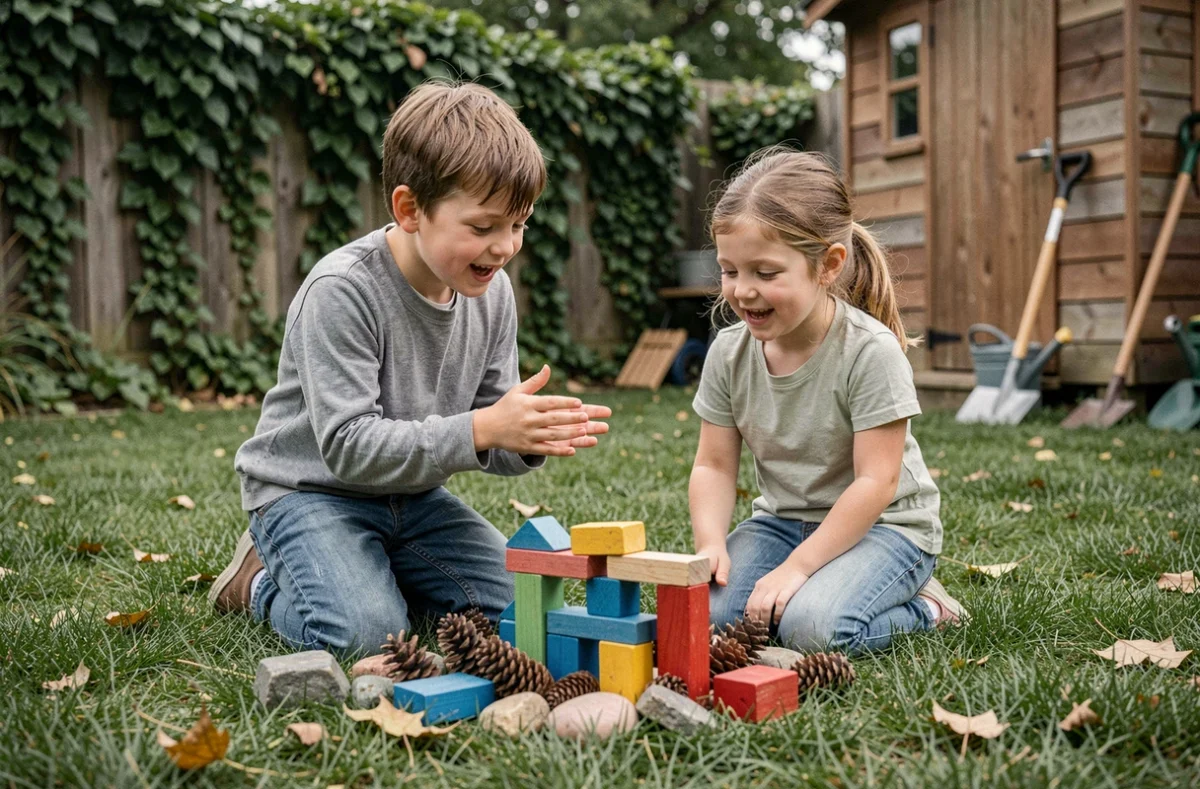
Unstructured outdoor play remains one of the most underestimated ways to support learning. A child turning over stones, following an ant or collecting sticks of different lengths to sort them is exploring biology, math and gross motor skills without needing those subjects named.
Nature offers a sensory variety that no indoor space can replicate: changing ground textures, shifting light and uncontrolled sounds. This unpredictability keeps the nervous system adapting, helping to strengthen sensory integration.
Mini science experiments outdoors
Planting a bean seed in a clear cup, placing it in the sun and observing the root and then the stem grow each day is a long-term experiment suitable for children as young as three. Children learn patience, the idea of a cycle and vocabulary related to living things (root, stem, leaf, light).
Collecting natural materials (pebbles, feathers, leaves) to create a temporary picture on the ground draws on the principles of land art. Working with whatever the surroundings provide sharpens observation and selection skills.
Role-play and storytelling: developing language through imagination
Symbolic play (playing house, doctor or shopkeeper) is more than simple entertainment. It builds language in context, prompting children to make requests, negotiate roles and keep a story going. It is direct practice in social communication.
A puppet theater made from socks or wooden spoons takes things a step further: children have to project their voices, distinguish between characters and manage the pace of the story. Puppet play combines spoken language, motor skills and narrative structure.
Group storytelling, where each participant adds a sentence, develops active listening and cognitive flexibility. Children have to take in someone else’s idea before continuing the story, exercising their working memory in the process.
- Starting with an absurd opening (“a cat that didn’t know how to meow”) frees children from the pressure to “tell a good story” and encourages them to take verbal risks.
- Using everyday objects as story prompts (a key, a hat, a closed box) grounds imagination in the real world.
- Recording the story on a phone and listening to it together helps children become aware of their own language use.
Everyday learning depends less on the list of activities than on the adult’s approach. Letting a child finish what they are doing, resisting the urge to correct them and accepting the temporary mess of a painting session: it is within this space of guided freedom that creativity and independence truly develop.