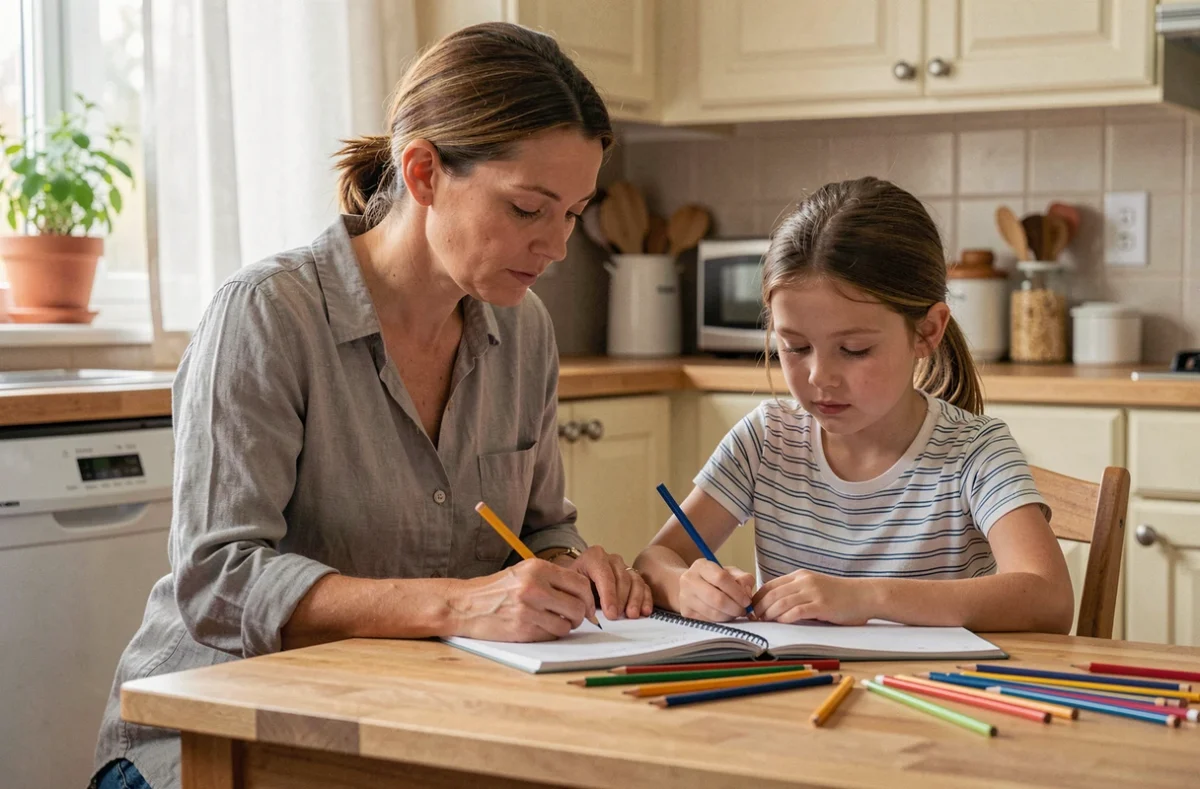
Supporting a child day to day means juggling their learning, emotions and screen exposure. Each age group brings different challenges, and effective solutions are not always what you might expect. Here are some practical, evidence-based ideas to help you adapt your parenting approach without striving for perfection.
Parental technoference: when a parent’s phone becomes a problem
The term parental technoference refers to adult screen use interfering with interactions with a child. Santé publique France describes this phenomenon in a feature in La Santé en action: checking your phone during a meal or while playing can fragment your attention, reducing the quality of verbal exchanges with a baby or young child.
Before managing your children’s screen time, it helps to take stock of your own. Leaving your phone in another room during meals, free play or bedtime routines creates periods of genuine availability. These don’t need to last for hours: a few stretches of uninterrupted attention are enough to strengthen a child’s sense of emotional security.
By deliberately putting their phone aside, parents model the relationship with screens they want to pass on. Children who see their parents able to disconnect are more likely to adopt this habit as a family norm.
For more on finding balance as a family, La Voie de la Famille’s advice explores different aspects of everyday parenting.

Positive discipline with children: setting boundaries without shouting
Positive discipline is based on a simple principle: separate a child’s behaviour from who they are. A child who hits isn’t “naughty”; they’re expressing frustration they don’t yet know how to put into words. This distinction changes how parents respond: name the emotion, set a limit on the behaviour and offer an alternative.
Three practical strategies for everyday life
- Give instructions in positive terms. “Walk slowly” works better than “Stop running” because young children’s brains process a direct instruction more easily than a negative one.
- Offer limited choices. “Would you like to wear the blue trousers or the grey ones?” gives a child a sense of control without opening the door to endless negotiation.
- Acknowledge the emotion before correcting the behaviour. “You’re angry because your brother took your toy. I understand. We don’t hit; we can ask using words.” This sequence (acknowledgement, limit, alternative) can be repeated whenever conflict arises.
These adjustments take repetition. A three-year-old needs to hear the same rule dozens of times before it sinks in. Consistency matters more than how sternly you react.
Children and screens: guide rather than ban
Excessive or passive screen exposure can harm language development in young children, according to Santé publique France. The organisation notes that the effects vary depending on how screens are used: watching educational content with a parent is not the same as watching videos alone for an hour.
Parental involvement turns a passive screen into a way to connect. Commenting on what’s happening on screen, asking questions about the story and linking the content to a real-life experience: these small interactions restore the social dimension that screens alone cannot provide.
Practical alternatives to screen time at home
Santé publique France highlights local initiatives that offer cultural and sporting activities as alternatives. At home, the principle is the same: replace screen time with an activity that engages the hands or body. Playdough, free drawing, building, or simple cooking with a parent. The aim isn’t to ban screens, but to limit them to set times.
One point that’s often overlooked: social and cultural inequalities have a strong influence on how families use digital media. Access to alternative activities varies from one area to another. Some local authorities offer digital parenting workshops through programmes such as those described by Santé publique France.
Reading and language: age-specific routines that make a difference
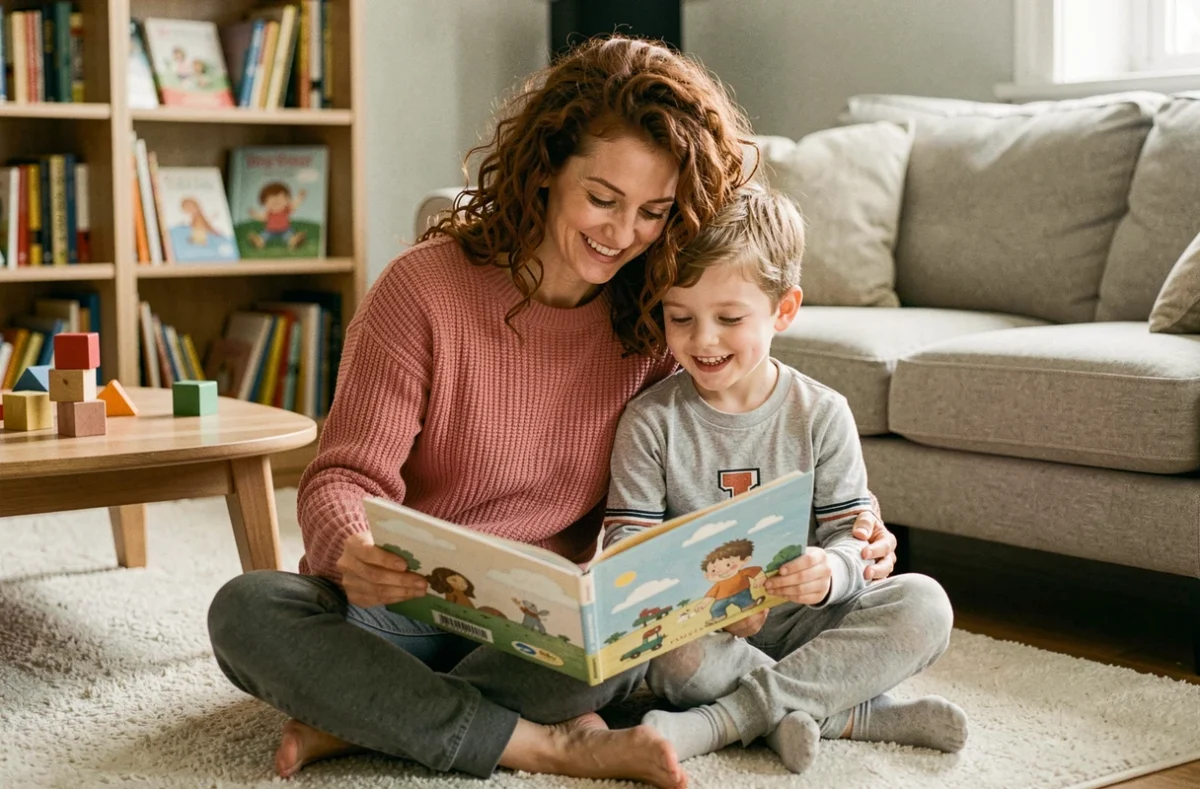
Reading a story every evening is more than a simple bedtime ritual. It’s a chance for children to expand their vocabulary, develop their understanding of stories and associate books with spending time close to a parent.
Before the age of three, pointing to pictures, naming objects and letting your child turn the pages is enough. Reading doesn’t need to follow a straight line: a toddler who keeps returning to the same page is exploring at their own pace.
Between the ages of three and six, open-ended questions come into play. “What do you think will happen next?” or “Why is the character sad?” encourage reasoning and the ability to form a hypothesis. These conversations about books develop spoken language far beyond the words in the story.
- Vary the formats: picture books, age-appropriate non-fiction and wordless comics for younger children.
- Let your child choose the book, even if it’s been the same one for three weeks. Repetition helps reinforce memory.
- Make reading part of other moments, not just bedtime: after a snack, in a waiting room or on a train journey.
Children build the foundations for learning to read at school through these spoken-language experiences. A child who starts CP with a store of words they’ve heard and understood in different contexts will find it easier to learn how to decode written words.
Supporting your children day to day doesn’t require special teaching skills. Doing a few simple things consistently (giving them your full attention, setting clear boundaries, reading together and using screens thoughtfully) has a cumulative effect over time. The hardest part isn’t knowing what to do; it’s sticking to these habits when you’re tired.