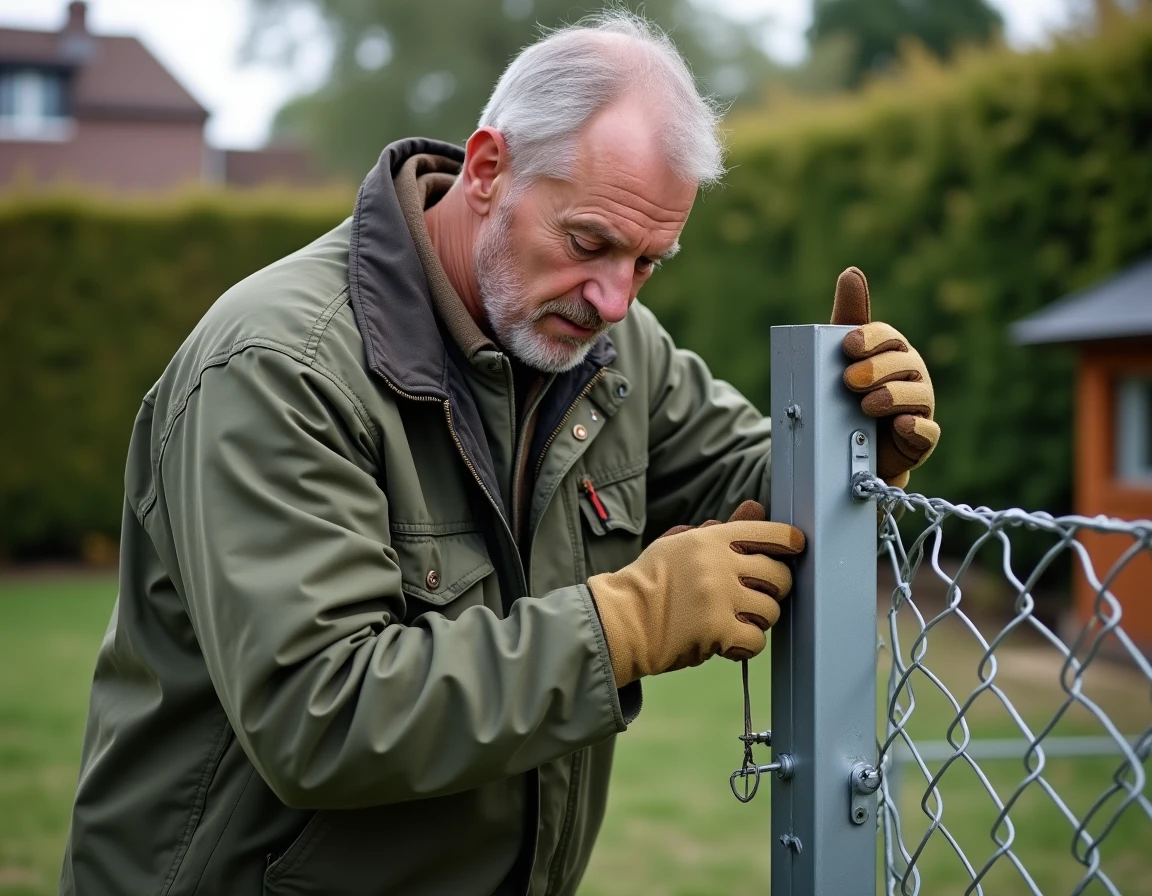
A pole extension is not chosen at random. The profile of the existing pole, its section, its anchoring method, and the condition of the galvanization determine the technical feasibility of the height increase. Here we detail the points that most guides gloss over.
Profile Compatibility: Pole Section and Extension Type
The extension must exactly match the profile of the existing pole. A sleeve designed for a T pole of 30 mm cannot be mounted on a T of 35 mm, let alone on a Y pole. Check the actual measurement with calipers before placing any order.
The T poles (T30 and T35) remain the most common on residential wire fences. Their extensions come in the form of sleeves that cover the top of the pole for about fifteen centimeters. Y poles, more common in security fencing, require dedicated extensions with a three-wing fitting.
For round poles (diameter 48 or 60 mm), the logic differs: the extension is a telescopic tube held by a through bolt or a clamp. The height adjustment is more flexible, but lateral rigidity decreases if the overlap between the two tubes is insufficient. We recommend an overlap of at least twice the diameter of the tube to limit leverage in case of wind.
Knowing how to raise a fence with a pole extension also requires checking that the original anchoring can support the additional load. A pole simply driven into the ground for 40 cm will not react the same way as a concreted pole at 50 cm.
Height Increase and Regulatory Constraints of the PLU
The final height of the fence, including the extension, must comply with the local PLU. In urban areas, the limit is often around two meters at the property line. Exceeding this threshold without authorization exposes you to a demolition order.
Commercial height increase kits generally allow for an addition of between 20 and 60 cm to the existing height. On a fence originally set at 1.50 m, this raises the total height to between 1.70 m and 2.10 m, a range that covers most needs for privacy or protection against animals.
Special Case of Anti-Deer Fences
The technical recommendations for blocking deer place the effective height between 2.0 m and 2.4 m. If your current fence measures 1.80 m, a standard extension of 40 to 60 cm is sufficient. Beyond that, adding a sloped flap at 30-45° outward is a lighter alternative than a pure vertical increase. The flap attaches directly to the extension or to a specific adapter compatible with T30 and T35 profiles.
Fixing the Extension: Assembly and Points of Caution
The assembly seems simple on paper. In practice, three errors consistently occur.
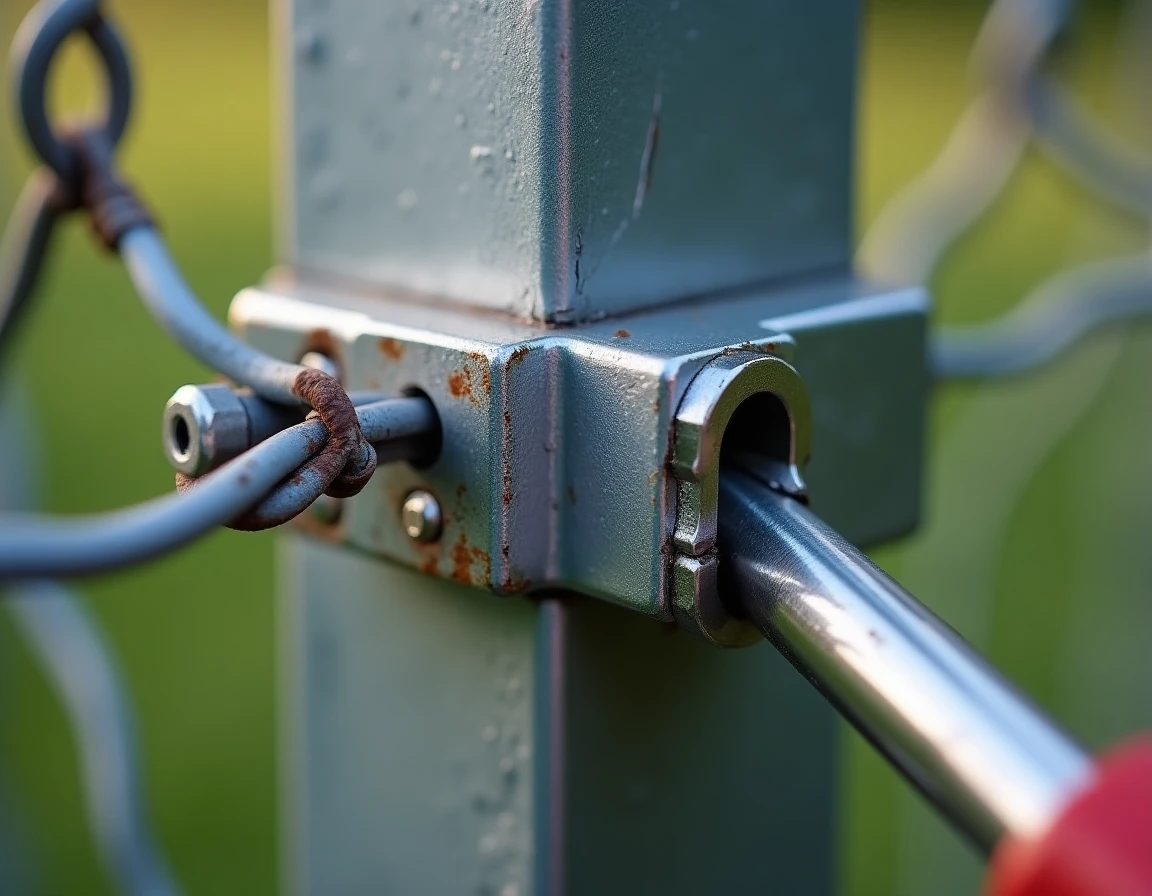
- Insufficient tightening of the sleeve: a fixing bolt tightened by hand does not withstand the vibrations of the fence under wind. Use a torque wrench or, if not available, tighten firmly and then check again after a week.
- Omission of the upper tension wire: the extension supports a new roll of fencing or an extension of the existing roll. Without a tension wire stretched between each pole at the top of the extension, the fencing will sag and pull on the attachments.
- Absence of anti-corrosion treatment on the cut: if you recut a galvanized sleeve, the exposed edge will rust within months. A spray of zinc paint is sufficient to protect the cut.
The order of work matters. First, install all extensions on the corner and brace poles, tension the top wire, and then equip the intermediate poles. This sequence ensures proper alignment and tension of the support wire.

Rigid Fencing or Flexible Fencing: The Extension Plays Different Roles
On a flexible roll fencing, the pole extension supports a second roll of fencing fixed overlapping the first. The overlap between the two rolls must cover at least one complete mesh to prevent an animal from passing between the two layers.
On a welded rigid fencing panel, the logic changes. The additional panel clips onto notches or is fixed with clamps to the extension. Manufacturers like Blooma (Castorama) now offer extension clamp kits and sleeves compatible with their standard ranges, eliminating the need for makeshift solutions.
Recent professional catalogs (notably the Dompro network) list dedicated ranges of accessories for raising existing fences, indicating that the height increase market is surpassing complete replacements. Raising is cheaper and can be done without removing the existing fence.
Stability After Height Increase: When to Reinforce the Anchoring
Adding 40 or 60 cm in height significantly increases wind resistance. If the original pole is simply set in loose soil, the risk of tipping becomes real in case of a storm. In this case, pouring a concrete footing around the base of the pole or adding a diagonal brace is not optional.
A properly concreted pole at a sufficient depth can easily handle the addition of a standard extension. But a pole that already moves by hand before the height increase will not hold up any better afterward. It is better to replace this isolated pole than to extend a fragile support.
The choice between extension and complete pole replacement comes down to a thirty-second check: shake the pole at ground level. If it remains fixed, the extension is suitable. If it wobbles, the anchoring needs to be redone before any height increase.