A natural garden is not declared by the accumulation of plants. It relies on a fine understanding of the soil, microclimate, and interactions between species. Here we discuss the technical levers that make the difference between a decorative green space and a functional ecosystem.
Soil and microclimate analysis before any planting
The pH, texture, and biological activity of the soil determine the success of each plant layer. Clay soil in northern areas retains water in winter and cracks in summer, which excludes many Mediterranean perennials without prior drainage. Conversely, acidic sandy soil points towards heathers, ferns, and heathland grasses.
We recommend a simple soil test (pH kit and sedimentation test in a jar) before purchasing any plants. This often-overlooked step prevents costly replacements after two or three seasons.
The microclimate takes precedence over the USDA zone. A south-facing wall creates a pocket of heat that can shift the hardiness of an entire area. Air currents channeled between buildings dry out foliage and promote powdery mildew. Mapping these pockets of heat, shade, and prevailing wind allows for positioning each species where it will thrive without treatment.
To delve deeper into the principles of plant arrangement suited to each context, the garden on L’Esprit Nature details complementary approaches to this logic of reading the land.
Structuring the plant layers of a natural garden
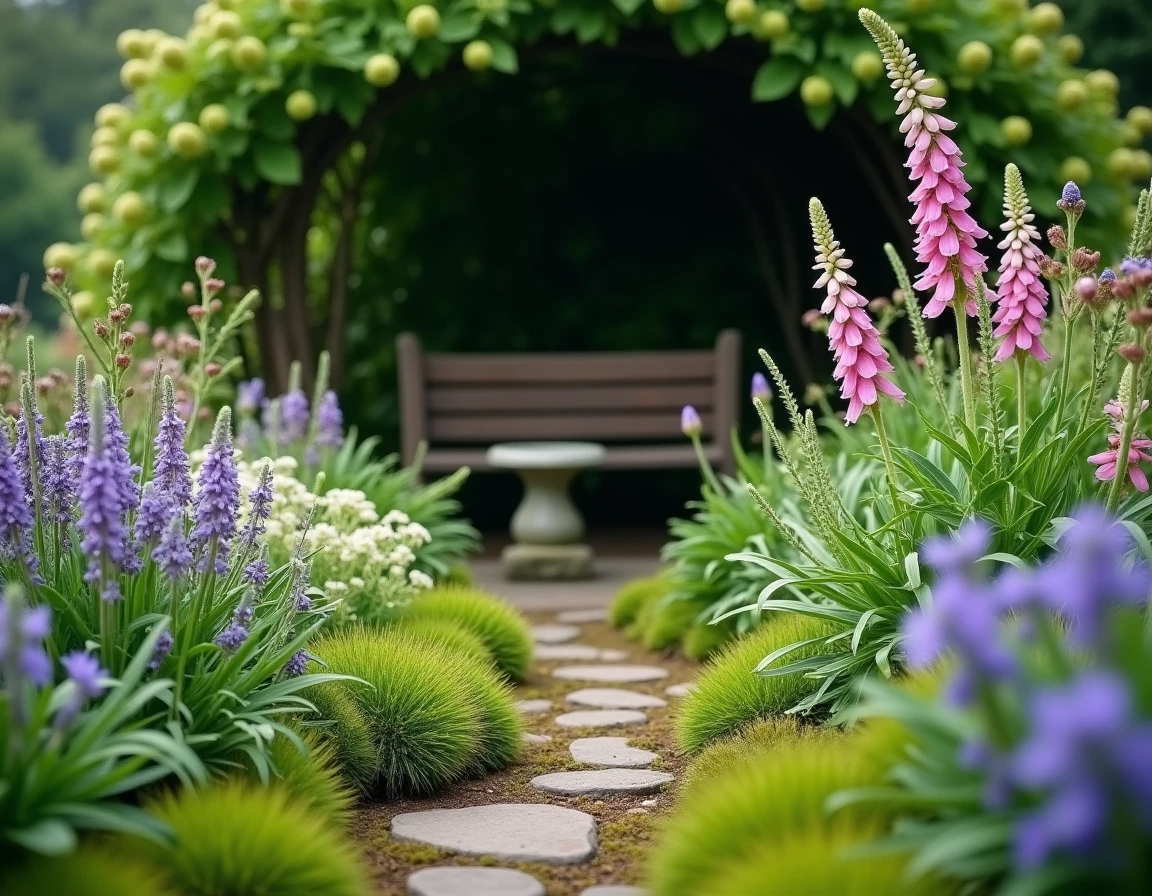
A harmonious garden replicates the stratification of a semi-natural environment: tree layer, shrub layer, herbaceous layer, and ground cover. Each layer plays a specific role in the balance of the whole.
The tree layer sets the framework. A small-growing tree (serviceberry, male dogwood) provides partial shade and food resources for birds without monopolizing space. The shrub layer, composed of species with staggered flowering, ensures a nectar resource from early spring to autumn for pollinators.
The herbaceous layer requires the most discernment. Mixing deep-rooted perennials (yarrow, meadow sage) with native grasses creates a dense cover that limits the germination of weeds. The ground cover (creeping ivy, bugle) seals the system and protects the soil surface from drying out.
Choosing native plants and functional associations
Local plants have a decisive advantage: they have co-evolved with the auxiliary fauna of the area. A black elder attracts more species of beneficial insects than an exotic buddleia, despite the latter’s reputation as a “butterfly bush.”
- Pair a legume (clover, bird’s-foot trefoil) with each flowerbed to fix atmospheric nitrogen and nourish neighboring plants without synthetic fertilizers.
- Place evergreen species to the north of the beds to serve as windbreaks without competing with sun-loving perennials.
- Integrate at least one umbellifer (wild fennel, wild carrot) per zone, as their flat flowers are the most effective for hoverflies and lacewings, natural predators of aphids.
Water management and mulching in an ecological garden
Reducing watering is a design goal, not a compromise. A living soil covered with organic mulch of fallen leaves or chipped wood (BRF) retains moisture much longer than bare soil or soil covered with decorative gravel.
Organic mulching simultaneously nourishes the soil fauna (earthworms, springtails) that structure the soil deeply. We observe that mulch maintained over several years gradually transforms even compacted soil into a crumbly, aerated substrate.

Rainwater harvesting, coupled with a network of ditches or shallow swales, directs water where it is useful. A swale planted with reeds or marsh irises filters runoff and creates a humid micro-habitat that attracts dragonflies and amphibians.
Dry zones and wet zones: creating a gradient
A natural garden increases biodiversity when it presents a gradient of humidity rather than uniform watering. A dry mound planted with thyme, oregano, and catmint in full sun coexists with a wet depression featuring willows and eupatoriums. This contrast multiplies ecological niches over a reduced area.
Welcoming auxiliary wildlife without an “abandoned” garden
The confusion between a natural garden and an abandoned garden hinders many homeowners. The difference lies in intentionality: each un-mowed area, each pile of wood, each dry stone wall serves a specific purpose for welcoming wildlife.
- Leaving a strip of spontaneous vegetation along the fence provides a corridor for hedgehogs and ground beetles.
- A pile of dead branches the size of a wheelbarrow is sufficient as a winter refuge for beneficial insects.
- Hollow stems of elder or bramble, cut and grouped horizontally, make an effective nesting site for solitary bees.
The LPO Refuge label, whose application requests have significantly increased since 2023 according to the League for the Protection of Birds, formalizes these practices and provides a framework for structuring the approach. It notably requires the absence of phytosanitary products and the establishment of accessible water points for wildlife.
A functional natural garden limits its pests on its own. When populations of hoverflies, lacewings, and ladybugs find shelter and food year-round, the need for treatments, even biological ones, becomes marginal. The Ecophyto plan and recommendations from INRAE confirm this dynamic: amateur gardeners who adopt mulching, composting, and beneficial insects significantly reduce their dependence on inputs.
The most advanced natural garden is one where human intervention decreases over time. The first seasons require setup work, then the ecosystem takes over. Patience and observation remain the two most underestimated tools of the gardener.