Creating a garden that is both flowering and productive throughout the year relies less on the number of varieties planted than on the blooming and harvesting schedule of each chosen species. The challenge is measured in weeks of plant coverage: how many weeks per year does the garden simultaneously offer flowers and something to harvest?
Coverage Calendar: Comparing Perennials, Bulbs, and Decorative Vegetables Season by Season
Most articles on flowering gardens provide lists of plants without specifying their actual windows of interest. The table below crosses three categories of plants with their active periods to visualize the gaps to fill.
| Category | Spring (March-May) | Summer (June-August) | Autumn (Sept-Nov) | Winter (Dec-Feb) |
|---|---|---|---|---|
| Bee-friendly Perennials (gaura, perennial hibiscus, echinacea) | Foliage in place, few flowers | Main blooming period | Extended blooming for some | Vegetative rest |
| Bulbs (crocus, daffodils, dahlias) | Intense blooming (spring bulbs) | Blooming of summer bulbs (dahlias) | End of summer blooming | No visible interest |
| Decorative Vegetables (colorful chard, purple cabbages, purple basils) | Sowing or young plants | Harvest and ornamental foliage | Harvest of cabbages, hardy chard | Cabbages and leeks still in place |
The most pronounced gap occurs between December and February: perennials are resting, spring bulbs are not yet visible, and only a few winter vegetables like cabbage or leeks maintain a presence. It is precisely during this period that evergreen shrubs (holly, viburnum, boxwood) help to cover.
The resources available on jardinews.com detail plant associations suitable for each season, which helps identify these empty windows before planting.
Ornamental Food Garden: Combining Edible Flowers and Decorative Vegetables
The approach that separates ornamental beds from vegetable patches is losing ground. In recent years, feedback from urban farmers and shared garden networks in the Île-de-France region has documented a clear increase in projects combining ornamental and self-production, even in very small spaces.
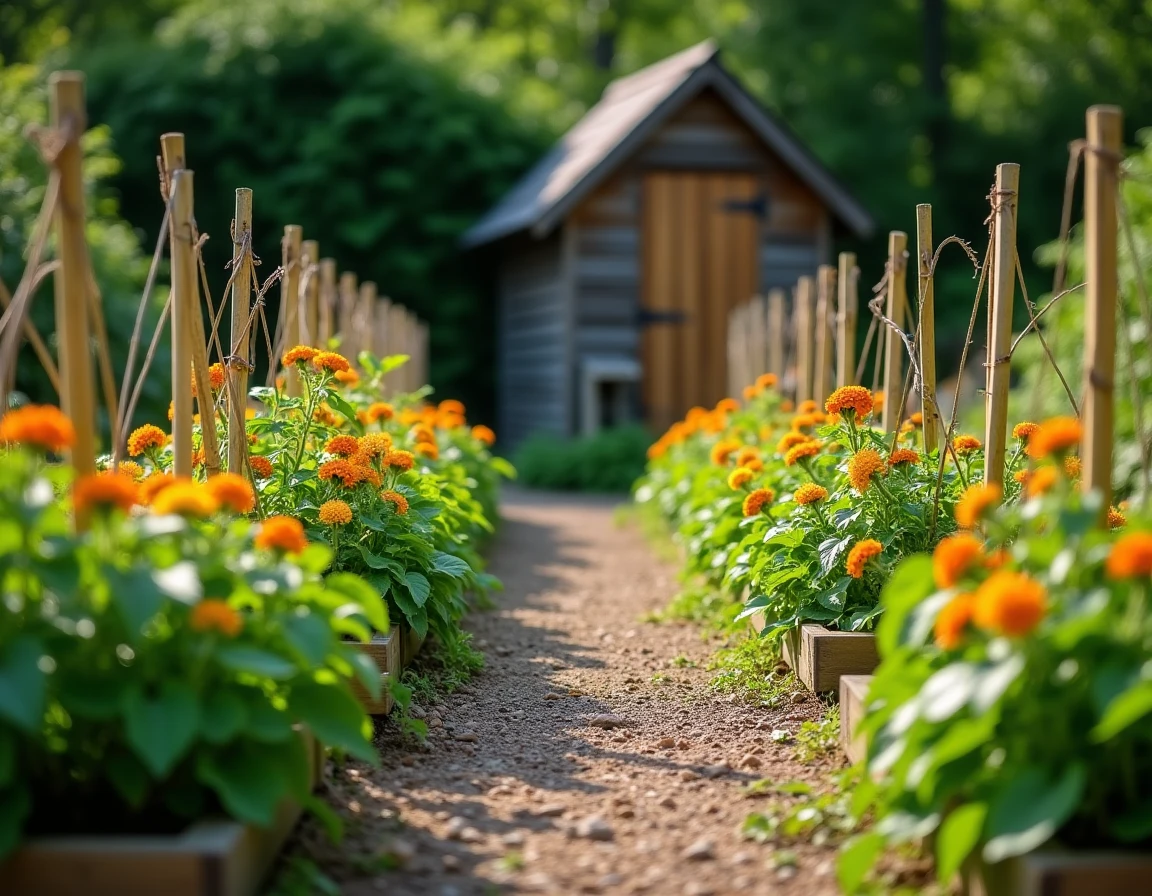
The principle is simple: each plant occupies a space because it fulfills at least two functions. A red-stemmed chard adds color to the bed while ending up on the plate. A purple basil structures a terrace edge and flavors salads.
Selection Criteria for a Mixed Bed
- Height at maturity: place tall vegetables (tomatoes, pole beans) at the back of the bed and low flowers (nasturtiums, marigolds) at the front so that each layer remains visible.
- Tolerance to neighbors: some bee-friendly perennials like lavender or gaura accept poor soil and drain water, which is not suitable for greedy vegetables. Plan for localized compost around the vegetables.
- Harvest calendar: if a chard is pulled in July, the gap in the bed must be anticipated with a replacement sowing (a basil, a nasturtium) ready to take over.
This type of arrangement works particularly well in micro-gardens and balconies where the space requires combining uses in every square meter.
Water Savings in the Flowering Garden: Drought-Resistant Plants and Mulching
Repeated drought orders in many French departments over the past few years have changed practices. Water agencies (Rhône-Méditerranée-Corse, Adour-Garonne) are distributing educational materials encouraging water-efficient productive gardens rather than watered lawns.
In practice, two levers significantly reduce water consumption without sacrificing the flowering aspect of the garden.
Mediterranean Varieties and Drought-Tolerant Vegetables
Shrubs like lavender, rosemary, rockrose, or common sage bloom abundantly with limited rainfall. In the vegetable garden, cherry tomatoes, peppers, and squash, once well-rooted, can withstand several days without watering.
On the other hand, large-flowered perennials like hydrangeas or dahlias require regular watering. Integrating them into a water-efficient garden means grouping them in a restricted irrigated area rather than dispersing them throughout the garden.

Mulching: The Most Effective and Underutilized Technique
A systematic mulching of the entire cultivated area limits evaporation, reduces watering, and protects soil life. Available materials vary: straw, wood chips, dead leaves, dried grass clippings.
Mulching offers an additional benefit in a mixed garden: as it decomposes, it nourishes the soil and reduces the need for fertilizers for vegetables. Perennial beds, on the other hand, appreciate less rich soil, which encourages differentiating the thickness of mulch according to the area.
Planning Blooming and Harvesting Relays Over Twelve Months
The table at the beginning of the article shows seasonal gaps. Filling these gaps requires planning plantings according to their succession rather than their individual appearance.
- Late winter (February-March): snowdrops and crocuses take over from persistent foliage. Sowing of early vegetables (radishes, lettuces) begins under cover.
- Transition from summer to autumn (August-September): asters and sedums bloom when summer perennials decline. In the vegetable garden, sowing of lamb’s lettuce and spinach prepares for winter.
- Entering winter (November): ornamental grasses (miscanthus, stipa) maintain their dry structure, decorative cabbages take on color with the cold.
This relay logic transforms the garden into a continuous system rather than a succession of peaks and troughs. Maintenance is also regulated: instead of planting everything in April and experiencing a void in October, each month includes a planting or sowing task.
The final choice between a purely ornamental garden and a mixed flowering-productive garden depends on the available space and the maintenance time per week. On less than twenty square meters, the mixed model maximizes every space. Beyond that, separating by zones remains an option if differentiated watering is manageable. In both cases, it is the continuity of the plant calendar that makes the difference between a garden that is attractive for a few months and a garden that is alive all year round.