Ronchopathy refers to chronic snoring, a respiratory noise produced by the vibration of soft tissues in the upper airways during sleep. Far from being just a simple sound annoyance, this phenomenon affects a significant portion of the adult population and may signal a more serious nocturnal respiratory disorder. Understanding its mechanisms allows for the distinction between benign snoring and that which requires structured medical management.
Ronchopathy and couple life: a shared health issue
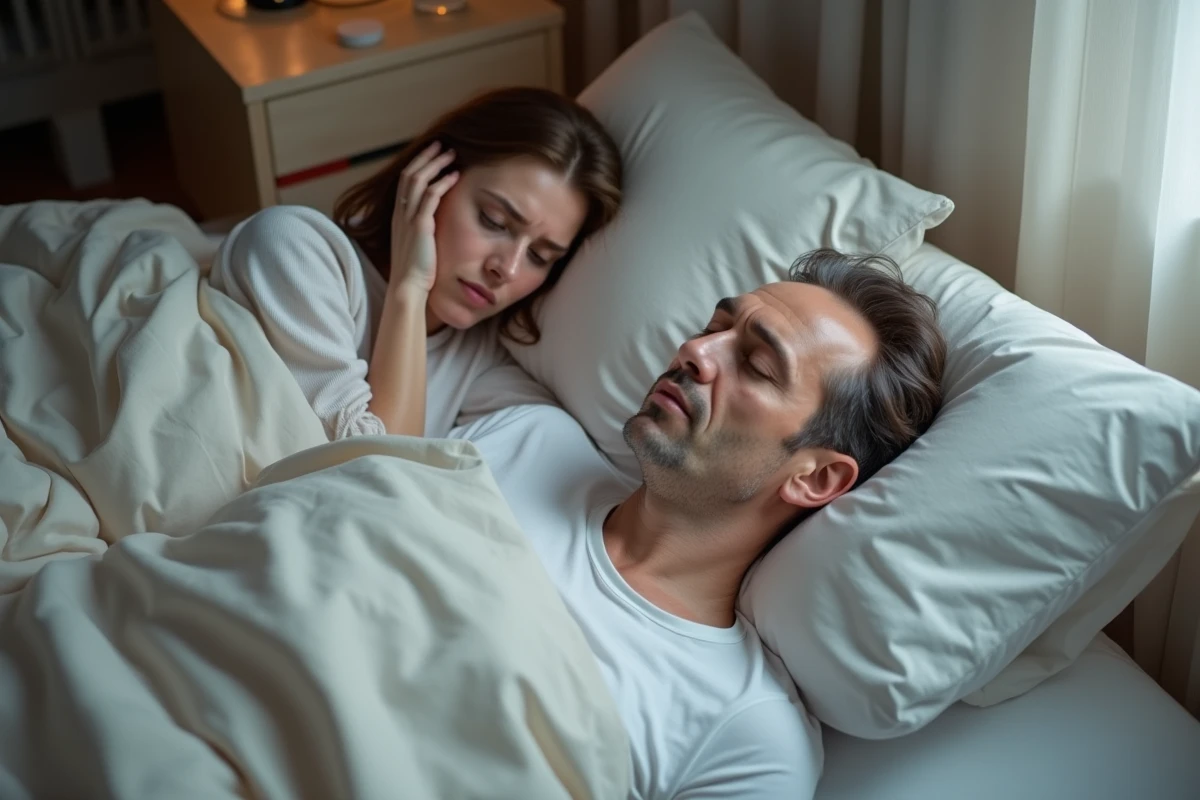
Snoring is often treated as an individual symptom. Medical articles detail the anatomy of the throat, the relaxation of the soft palate, the position of the tongue. But in daily reality, ronchopathy affects both the partner and the snorer.
The nighttime noise fragments the sleep of the person sharing the bed. Multiple awakenings, accumulated fatigue, daytime irritability: the consequences extend far beyond the medical framework to impact relational balance. Some couples end up sleeping in separate rooms, which can create a gradual emotional distance.
This is why medical consultation benefits from involving both members of the couple. The partner is often the first to describe the frequency of the snores, their intensity, and especially the possible presence of nocturnal breathing pauses, a sign that the doctor cannot observe in the office. To delve deeper into the subject, the information from Toujours Le Bon Choix details the different forms of this pathology and their implications.
Simple snoring or sleep apnea: where is the boundary

Not all snorers suffer from obstructive sleep apnea. The distinction between the two is crucial for guiding management. Snoring becomes concerning when it is accompanied by breathing pauses, sensations of nighttime choking, or marked daytime drowsiness.
Simple snoring is a regular noise, without interruption of breathing, that does not disrupt the quality of sleep of the snorer themselves. It may be bothersome for those nearby, but does not pose a direct health risk.
Obstructive sleep apnea, on the other hand, is characterized by repeated respiratory stops and starts. The airways completely close for a few seconds, causing micro-awakenings that the sleeper may not always perceive. Warning signs to watch for include:
- Snoring interspersed with silence followed by loud gasps (gasping, choking), most often reported by the partner
- Headaches upon waking, persistent dry mouth, and a feeling of fatigue despite a full night’s sleep
- Excessive daytime drowsiness with difficulties in concentration, mood swings, or memory problems
The presence of several of these symptoms warrants a prompt medical consultation. The doctor can then refer for specialized testing, usually a ventilatory polygraphy or polysomnography, to objectively measure nocturnal respiratory events.
Multifactorial causes of snoring: anatomy, lifestyle, and congestion
Ronchopathy almost never has a single cause. It results from a combination of factors that overlap and exacerbate each other.
Anatomical and genetic factors
Some individuals have naturally narrower airways. A deviated septum, enlarged tonsils, a thick soft palate, or a recessed lower jaw reduce the available space for air passage. These anatomical features explain why snoring also affects thin and athletic individuals.
In children, enlarged adenoids are the most common cause of snoring. An ENT consultation is recommended if a child snores regularly, as it can affect their development and quality of sleep.
Lifestyle habits and aggravating factors
Being overweight increases the volume of fatty tissue around the neck and throat, compressing the airways during sleep. Alcohol consumption and the use of sedatives enhance muscle relaxation in the throat. Smoking causes chronic inflammation of the nasal and pharyngeal mucous membranes.
The sleeping position also plays a direct role. Sleeping on the back encourages the tongue to fall back towards the throat, worsening partial obstruction. Nasal congestion related to allergies or a cold can be enough to trigger snoring in someone who does not usually suffer from it.

Solutions for snoring: from repositioning to ENT management
In the face of mild and occasional snoring, simple adjustments may suffice. Sleeping on the side, slightly elevating the head of the bed, avoiding alcohol in the evening, and maintaining a stable weight constitute a first level of action. These measures reduce snoring in a notable proportion of occasional snorers.
For persistent snoring, several devices are available:
- Mandibular advancement devices, worn at night, keep the lower jaw in an advanced position to clear the airways
- Nasal dilators or strips can help in cases of nasal obstruction, but their effect remains limited if the obstruction is at the throat level
- Continuous positive airway pressure (CPAP), prescribed in cases of confirmed obstructive sleep apnea, prevents airway collapse through a constant airflow
When an anatomical cause is identified, a structured ENT referral allows for consideration of a foundational treatment. Some surgical interventions correct a septal deviation, reduce the size of the tonsils, or stiffen the soft palate. The available data do not allow for a conclusion regarding the systematic superiority of one technique over another: the choice depends on the precise location of the obstruction.
Sprays and homeopathic solutions widely marketed lack solid evidence regarding their effectiveness on chronic snoring. They may provide temporary relief in cases of congestion but do not address the mechanical cause of the problem.
The most effective pathway remains one that begins with an evaluation of nocturnal respiratory risk, rather than the purchase of accessories at the pharmacy. A general practitioner can conduct an initial screening and refer to a sleep specialist or an ENT based on the clinical picture. This initial evaluation distinguishes benign discomfort from a disorder requiring regular medical follow-up.