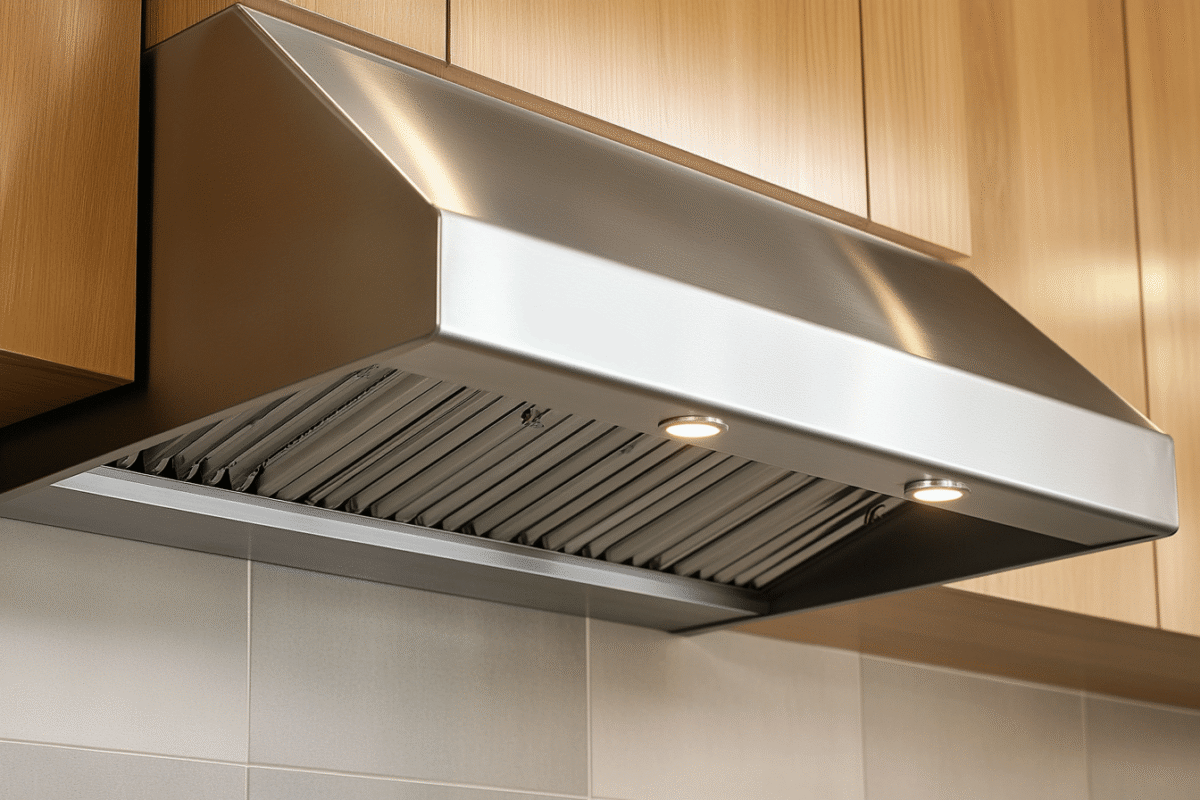
Motorless hoods are an ingenious solution for professional kitchens looking to minimize noise while ensuring effective ventilation. Their unique design relies on the use of an external motor, often connected to a centralized ventilation system, to draw away smoke and cooking odors.
Origin and Use of Motorless Hoods
Motorless hoods were designed to meet the needs of kitchens where noise control is paramount. By relocating the motor outside or to a remote location, these hoods provide a quieter working environment. They are particularly useful in apartment buildings where a centralized ventilation system is often already in place.
Dimensions and Height of Wall-Mounted Motorless Hoods
- Standard height of wall-mounted motorless hoods for professional kitchens: These hoods are generally installed at a height that allows for optimal suction without hindering the cook.
- Size options for motorless hoods: Available in various sizes, these hoods adapt to different kitchen spaces and configurations.
Static Operation of Motorless Hoods
The basic principle of motorless hoods is based on an effective filtration system. They capture grease particles and odors through specific filters, often charcoal, before expelling them outside via a duct.
Features and Benefits of Wall-Mounted Motorless Hoods
- Types of materials: Wall-mounted motorless hoods are often made of stainless steel for their durability and ease of maintenance.
- Differences between stainless steel and plastic: Stainless steel is preferred for its resistance to heat and chemicals.
- Price comparison: Motorless hoods can be more economical to purchase, but this varies by brand and technical specifications.
Maintenance and Care of Motorless Hoods
Regular maintenance of the filters is essential to maintain the efficiency of motorless hoods. It is recommended to clean the filters regularly and to replace the charcoal filters approximately every four months to ensure optimal performance.
Cleaning and Replacing Filters
| Filter Type | Cleaning Frequency | Replacement Procedure |
|---|---|---|
| Charcoal Filters | Every 4 months | Remove the used filter and replace it with a new one. |
| Grease Filters | Every month | Wash in soapy hot water or in the dishwasher. |