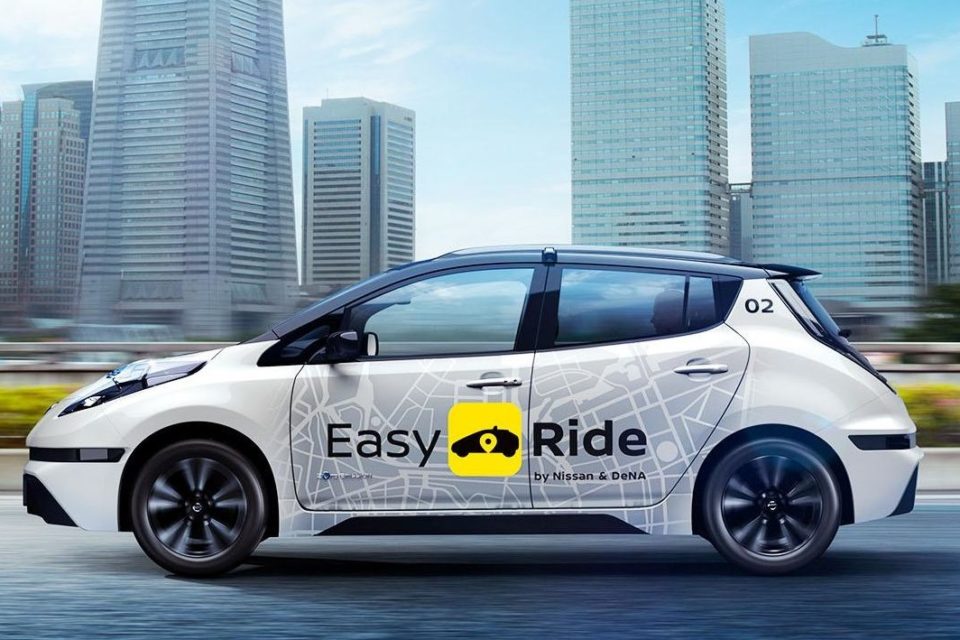
A few months ago, the Japanese brand Nissan announced a large-scale project. It plans to launch a robot taxi. This is a car that will transport passengers from one point to another without any human intervention. These vehicles will thus be driverless. The brand has indeed started testing its project as promised. Several participants have been selected to take part in this preliminary project. Failures will thus be detected and solutions will be provided so that by 2020, the commercial robot taxi service will be operational in cities across Japan.
Two robot taxis available for users
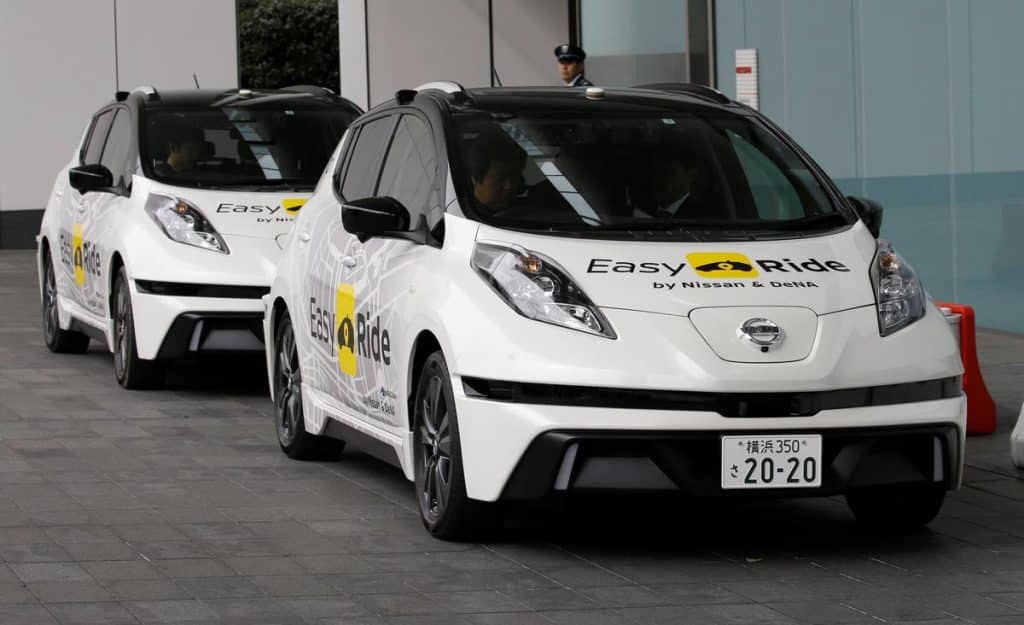
For the test of its robot taxi project, the car brand Nissan has made two autonomous vehicles available to the residents of the Minato Mirai waterfront district in Yokohama, not far from Tokyo. In partnership with DeNa, a company specializing in mobile telecommunications, an application has been developed. It is called “Easy Ride” and it will be used for booking the autonomous car.
A lire en complément : How to fill out the cerfa 3233 sd online to easily obtain a property certificate
This test generally aims to take into account the population’s acceptance of robot taxis. In the very near future, robot taxis could represent more than 45% of the total profits in the automotive sector. This certainly justifies the interest that tech giants have in autonomous taxis.
Main features of the robot taxis being tested by Nissan
A découvrir également : Purchase promise and purchase offer: what’s the difference?
The two taxis offered by Nissan for this 15-day test are equipped with cutting-edge technologies. They feature 13 cameras linked to a radar and 6 scanners. These elements will allow the car to detect obstacles while in motion and act accordingly, based on its programming.
The two cars can be booked directly through the booking application “Easy Ride” developed by DeNa, Nissan’s partner. These vehicles will be able to complete a pre-determined route of 4.5 km in the Minato Mirai waterfront district. However, during this test, a driver is present in the car. Their role is to take control in case of major malfunctions of the vehicle; their presence is thus a safety measure. Additionally, a control center composed of several operators monitors the vehicle’s progress through the alleys and streets of the city. In terms of comfort, both vehicles provide the necessary amenities for passengers to enjoy an unforgettable experience during their ride.
In particularly dense traffic in this city, the cars were able to navigate several turns. Thanks to their various sensors, they were able to avoid users. They adhered to the traffic regulations in the city, taking into account traffic lights and various priorities. The results of the test are generally convincing. Furthermore, the Renault group allied with the Nissan brand also plans to conduct tests in the alleys of Normandy in the Rouen region. This project could significantly provide a new experience in transportation.