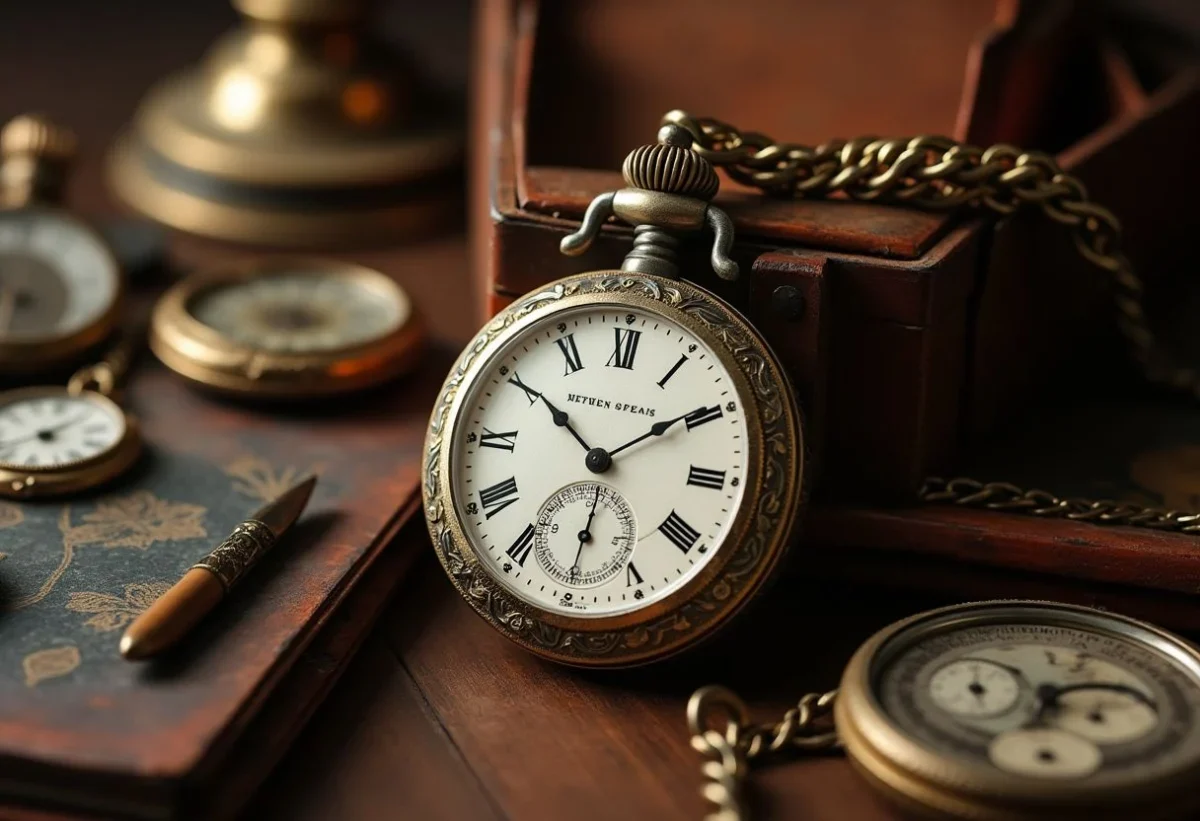
The pocket watch, a timeless jewel and an immutable witness of past centuries, remains an object of fascination and refinement. This timepiece, often associated with the elegance of gentlemen from another era, has managed to transcend ages without losing its charm. With its rich history and mechanisms of unparalleled horological precision, it still finds its place in the hearts of collectors and lovers of fine watchmaking. A symbol of social status or a simple fashion accessory, the pocket watch tells us a part of our history while remaining resolutely modern and alluring.
A rich and fascinating history
The pocket watch has its origins in the late 16th century, a time when portable watchmaking began to take shape. Originating from Germany, it quickly spread across Europe, becoming a prized object among the elite.
- Invention and evolution : The emergence of the first pocket watches marked a turning point in the history of watchmaking. At the time, their mechanism was a technological feat, and artisans competed in ingenuity to miniaturize watch movements.
- The golden century : In the 19th century, the pocket watch reached its peak. It became a fashion reference for businessmen and gentlemen, often personalized and adorned with delicate engravings.
- A witness to change : With the advent of wristwatches in the 20th century, the popularity of the pocket watch began to decline, but it managed to retain a circle of passionate enthusiasts.
The unique charm of the Pocket Watch
What makes the pocket watch so special is its subtle blend of tradition and refinement. It evokes a time when time was a matter of precision and contemplation, far from modern frenzy.
Wearing a pocket watch allows one to reconnect with this ancient art of living. For some, it is a symbol of nostalgia; for others, a means to express their individuality. Antique pieces, often passed down from generation to generation, carry with them a rich past filled with family anecdotes, travel stories, and unforgettable moments.
The materials used, whether gold, silver, or enamel, add a touch of luxury that gives the pocket watch the status of a precious work of art. Not to mention the internal mechanisms, true masterpieces of human ingenuity, testifying to centuries of watchmaking expertise.
The components of a Pocket Watch
Let’s dive into the very heart of the pocket watch to understand its various components and what makes it so special in the eyes of watch enthusiasts.
- The case : Generally made of precious metal, it protects the delicate mechanism. Its design is often refined, with engravings and patterns that tell a story.
- The dial : The face of the watch, adorned with Roman or Arabic numerals, displays the time with elegance. Some dials are enhanced with complications, such as moon phases or chronographs.
- The movement : The beating heart of the watch, often mechanical, requiring manual winding. Antique mechanisms are prized for their precision and durability.
- The chain : An iconic element, it secures the watch in the pocket of a waistcoat. It adds an aesthetic and practical dimension to the whole.
The modest yet powerful appeal of collecting
Collecting pocket watches is a passion that goes far beyond mere possession of an object. It is a way to connect with a bygone era, to immerse oneself in the ingenuity and craftsmanship of past centuries.
Each watch represents a chapter in the history of watchmaking, reflecting the trends and evolutions of its time. Collectors, often driven by a quest for rarity, seek unique pieces with a rich and captivating past. Auctions and specialized fairs are privileged opportunities to enrich their collection and discover hidden treasures.
The pocket watch, as a symbol of charm and tradition, continues to enchant those who appreciate its singular beauty and enduring heritage. It testifies to the longevity of watchmaking craftsmanship and the timeless elegance of well-designed objects. Whether as a family heirloom or a collector’s treasure, it remains a centerpiece and a tribute to the precision and style of ancient times.